

German Language Pronunciation Classes: Learn to Speak German Correctly
German Language Pronunciation Classes
Learning German is not just about understanding grammar rules or memorising vocabulary. Speaking clearly and pronouncing words correctly are equally important when communicating in a new language. Many learners understand basic German but hesitate when speaking because they are unsure about pronunciation, sounds and word stress. This is where German Language Pronunciation Classes can make a real difference. With proper guidance, regular speaking exercises and listening practice, learners can gradually develop better pronunciation and communication skills.
Whether you are a beginner, student or working professional, learning correct German pronunciation can help you communicate more naturally. Joining suitable German Language Classes also provides an opportunity to practise speaking, understand difficult sounds and improve confidence through interactive learning.
Why Is German Pronunciation Important When Learning German?
Pronunciation plays an important role in effective communication. Even if you know the correct German vocabulary and grammar, unclear pronunciation can sometimes make it difficult for others to understand your message.
German has certain sounds that may feel unfamiliar to English or Hindi speakers. For example, the German letters ä, ö, ü and ß have specific pronunciation patterns that learners need to understand.
Correct pronunciation helps learners in several ways:
- Clear Communication: Proper pronunciation makes spoken German easier to understand.
- Speaking Confidence: Regular pronunciation practice reduces hesitation while speaking.
- Better Listening Skills: Understanding German sounds helps learners recognise spoken words.
- Professional Communication: Clear speech is useful in academic and workplace environments.
- Natural Conversations: Learning word stress and sentence rhythm helps improve everyday communication.
Developing pronunciation skills from the beginning can make the overall German learning journey more effective.
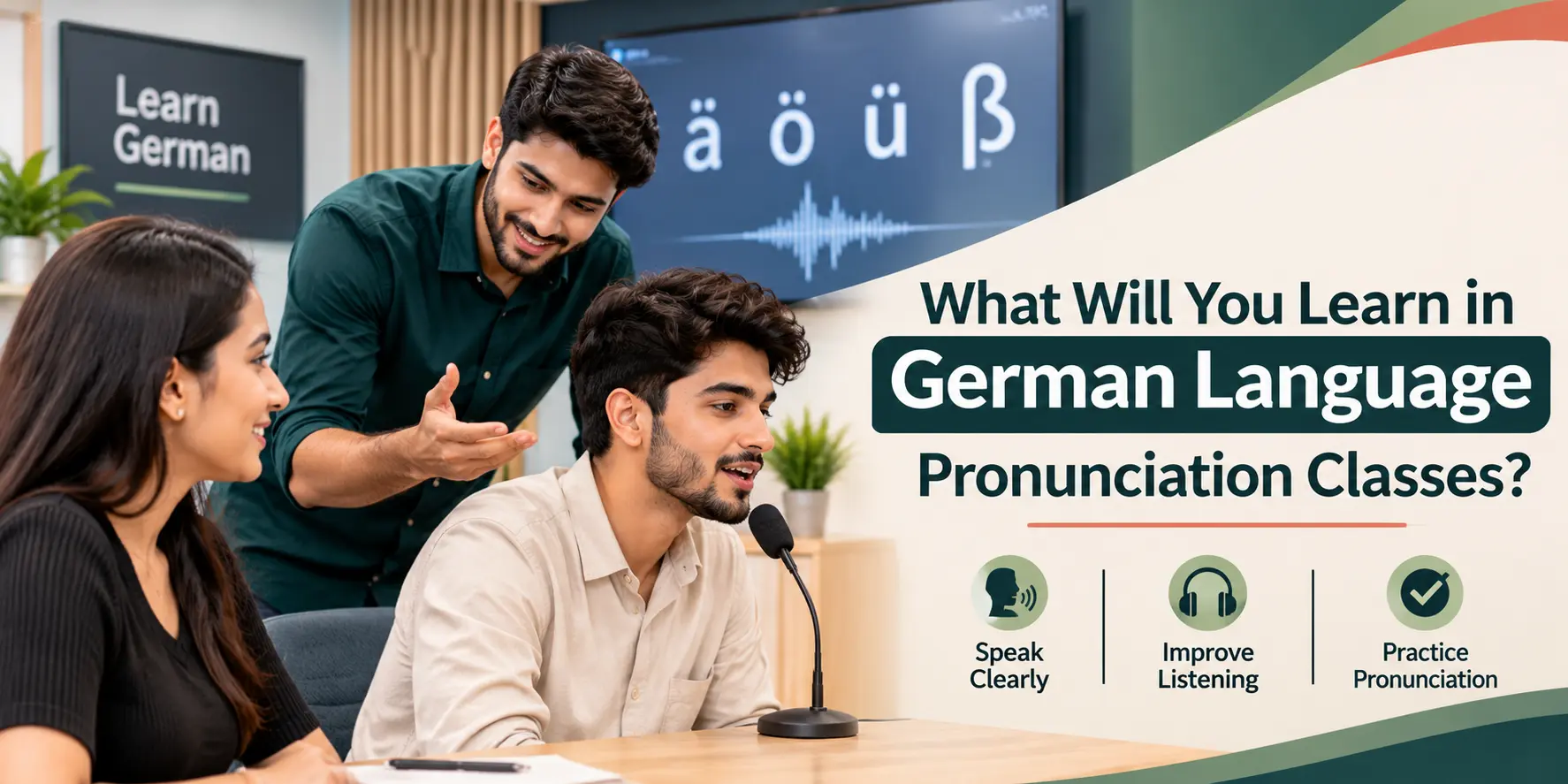
What Will You Learn in German Language Pronunciation Classes?
German Language Pronunciation Classes focus on helping students understand how German words and sentences should sound. Instead of simply reading words from a textbook, learners practise speaking and listening through guided activities.
1. German Alphabet and Letter Sounds
The first step in learning pronunciation is understanding the German alphabet. Although German uses the Latin alphabet, some letters and letter combinations are pronounced differently from English.
Students learn the sounds of individual letters, vowels, consonants and commonly used combinations. Understanding these basics helps beginners read and pronounce German words more accurately.
2. Understanding German Umlauts
German has three important umlaut vowels: ä, ö and ü. These sounds are different from ordinary vowels and may require extra practice for beginners.
For example:
- Ä: A distinct vowel sound that differs from a regular German A.
- Ö: A rounded front vowel.
- Ü: A front vowel produced with rounded lips.
Practising these sounds regularly helps learners become more comfortable with German vocabulary.
3. German Consonants and Special Characters
Some German consonants have pronunciation patterns that learners should understand carefully.
The letter combination CH, for example, can represent different sounds depending on the word. The letter ß, known as Eszett, represents a sharp S sound.
Pronunciation training helps students recognise these differences through examples and listening exercises.
4. Word Stress and Sentence Rhythm
Correct pronunciation is not only about individual letters. Word stress and sentence rhythm also influence how naturally someone speaks German.
Students practise identifying stressed syllables, connecting words and speaking complete sentences with appropriate rhythm.
5. Listening and Speaking Exercises
Listening to native German speech helps learners understand natural pronunciation. Speaking exercises allow them to apply what they have learned in practical situations.
Role-playing, reading aloud and conversation activities can improve pronunciation through regular practice.
How Can Beginners Improve Their German Speaking Skills?
Beginners sometimes feel nervous when speaking a foreign language. However, pronunciation improves gradually through consistent practice and correction.
Here are some useful ways to improve German speaking skills:
Listen to German Every Day
Listen to German conversations, educational videos, podcasts and language-learning recordings. Pay attention to how words are pronounced and how sentences flow naturally.
Practise Reading Aloud
Choose simple German paragraphs and read them aloud. Start slowly and focus on pronunciation instead of speaking quickly.
Record Your Voice
Recording your voice while speaking German can help you identify unclear sounds and pronunciation mistakes. Compare your recordings with reliable German audio examples.
Learn Common German Words
Practise frequently used German vocabulary and everyday expressions. Learning pronunciation alongside vocabulary makes it easier to remember correct sounds.
Practise Speaking Regularly
Try speaking German with teachers, classmates or language partners. Regular conversations help you become more comfortable using the language.
Choosing the Right German Language Course in Delhi
Selecting the right learning programme is important if you want to develop strong German communication skills. A suitable German Language Course in Delhi should focus on grammar, vocabulary, listening, reading, writing and speaking.
Before joining an institute, consider these important factors:
Experienced Language Trainers
Look for trainers who can explain German pronunciation, grammar and sentence formation clearly. Proper feedback helps students identify mistakes and improve their speaking abilities.
Practical Speaking Sessions
Choose German Language Courses that include regular speaking activities, listening exercises and classroom conversations.
Beginner-Friendly Learning Methods
Students who are new to German should look for structured lessons that introduce pronunciation and grammar gradually.
Level-Based Training
Check whether the institute provides learning opportunities for different proficiency levels, such as A1, A2, B1 and B2.
Interactive Classroom Environment
A positive classroom environment encourages students to ask questions, practise conversations and improve their confidence.

German Language Pronunciation for Students and Working Professionals
Correct German pronunciation is useful for people with different educational and professional goals.
German Pronunciation for Students
Students planning to study in Germany can benefit from developing strong speaking and listening skills. Clear pronunciation can support classroom communication, everyday conversations and language proficiency preparation.
German Pronunciation for Working Professionals
Professionals interested in international career opportunities may need German communication skills when interacting with German-speaking clients, colleagues and organisations.
German Language for Nursing in Germany
Nurses planning to work in Germany need to develop communication skills for interacting with patients, doctors and healthcare teams.
German Language for Nursing in Germany includes learning medical vocabulary, understanding instructions and communicating in healthcare situations. Proper pronunciation is particularly important because clear communication can help reduce misunderstandings in professional environments.
Why Choose a German Language Institute in Delhi for Pronunciation Training?
Learning pronunciation independently can be challenging because students may not always recognise their own mistakes. A professional German Language Institute can provide structured lessons, guided speaking activities and regular feedback.
A good German Language Academy should focus on developing practical communication skills rather than limiting lessons to grammar and written exercises.
Germanacharya provides German language learning opportunities for students and professionals interested in improving their German proficiency.
Learners exploring German Language Pronunciation Classes should consider the teaching approach, practical speaking opportunities, trainer guidance and course structure before selecting a programme.
You can explore the available German Language Courses at Germanacharya to understand the learning options.
Visit the Germanacharya official website for more information about German language learning programmes.
Best Resources to Practise German Pronunciation
Apart from classroom training, learners can use additional resources to improve their pronunciation and listening abilities.
Some useful learning resources include:
- Goethe-Institut: Provides German language learning resources and educational material. Visit https://www.goethe.de/ins/in/en/spr.html
- Deutsche Welle: Offers German learning lessons, listening activities and educational resources. Visit https://learngerman.dw.com/
- German Audio Practice: Listening to German conversations and recordings can help learners become familiar with natural speech patterns.
Combining classroom learning with regular listening and speaking practice can support better language development.
Frequently Asked Questions (FAQs)
1. What are German Language Pronunciation Classes?
German Language Pronunciation Classes are learning sessions that help students understand German sounds, vowels, consonants, word stress and sentence pronunciation through guided speaking and listening activities.
2. How can beginners learn correct German pronunciation?
Beginners can improve pronunciation by learning German letter sounds, practising umlauts, listening to German recordings, reading aloud and receiving feedback from experienced trainers.
3. Is German pronunciation difficult to learn?
Some German sounds may initially feel unfamiliar, especially for learners who speak Hindi or English. However, regular listening and speaking practice can make pronunciation easier over time.
4. Can I improve my German pronunciation at home?
Yes. You can practise at home using German audio lessons, pronunciation exercises, educational videos and voice recordings. Regular classroom guidance can also help identify mistakes.
5. Which German level should beginners start with?
Beginners should generally start with A1. This level introduces basic vocabulary, pronunciation, greetings, grammar and everyday communication.
6. Are German pronunciation classes useful for nurses planning to work in Germany?
Yes. Pronunciation practice can help nurses communicate more clearly with patients and healthcare professionals. It should be combined with medical vocabulary and the language proficiency preparation required for their professional pathway.
7. Where can I find German Language Classes in Delhi?
You can explore German language institutes and academies that provide structured courses, practical speaking sessions and pronunciation training. Compare their teaching methods and course levels before enrolling.
Conclusion
Learning to pronounce German words correctly is an important step towards becoming a confident German speaker. Understanding vowels, consonants, umlauts, word stress and sentence rhythm helps learners communicate more clearly in everyday and professional situations. German Language Pronunciation Classes provide structured opportunities to practise these skills with proper guidance and regular speaking activities.
Whether you are a beginner, student, working professional or nurse planning to explore opportunities in Germany, improving your pronunciation can strengthen your overall language skills. Choose a suitable German language programme, practise consistently and focus on clear communication to make steady progress in your German learning journey.