

German Grammar Basics for Beginners
German Grammar Basics for Beginners: A Complete Step-by-Step Guide
Introduction to German Grammar
Learning German can be an exciting experience, but for beginners, grammar often feels confusing. Many learners feel overwhelmed by rules and sentence structures in the beginning. However, when you learn step by step, German Grammar Basics become much easier to understand. In this blog, you will learn simple and practical ways to master German grammar with confidence.
Why German Grammar Is Important
Grammar is the foundation of every language. Without proper grammar, sentences can become unclear and incorrect. When you understand German Grammar Basics, you can speak more confidently, write accurately, and understand native speakers better. Strong grammar skills also help you improve your overall fluency.
German Alphabet and Pronunciation
The German alphabet is similar to English, but it includes special letters such as Ä, Ö, Ü, and ß. These letters have unique sounds that change the meaning of words. Learning correct pronunciation from the beginning helps you develop better speaking and listening skills.
Nouns and Gender in German
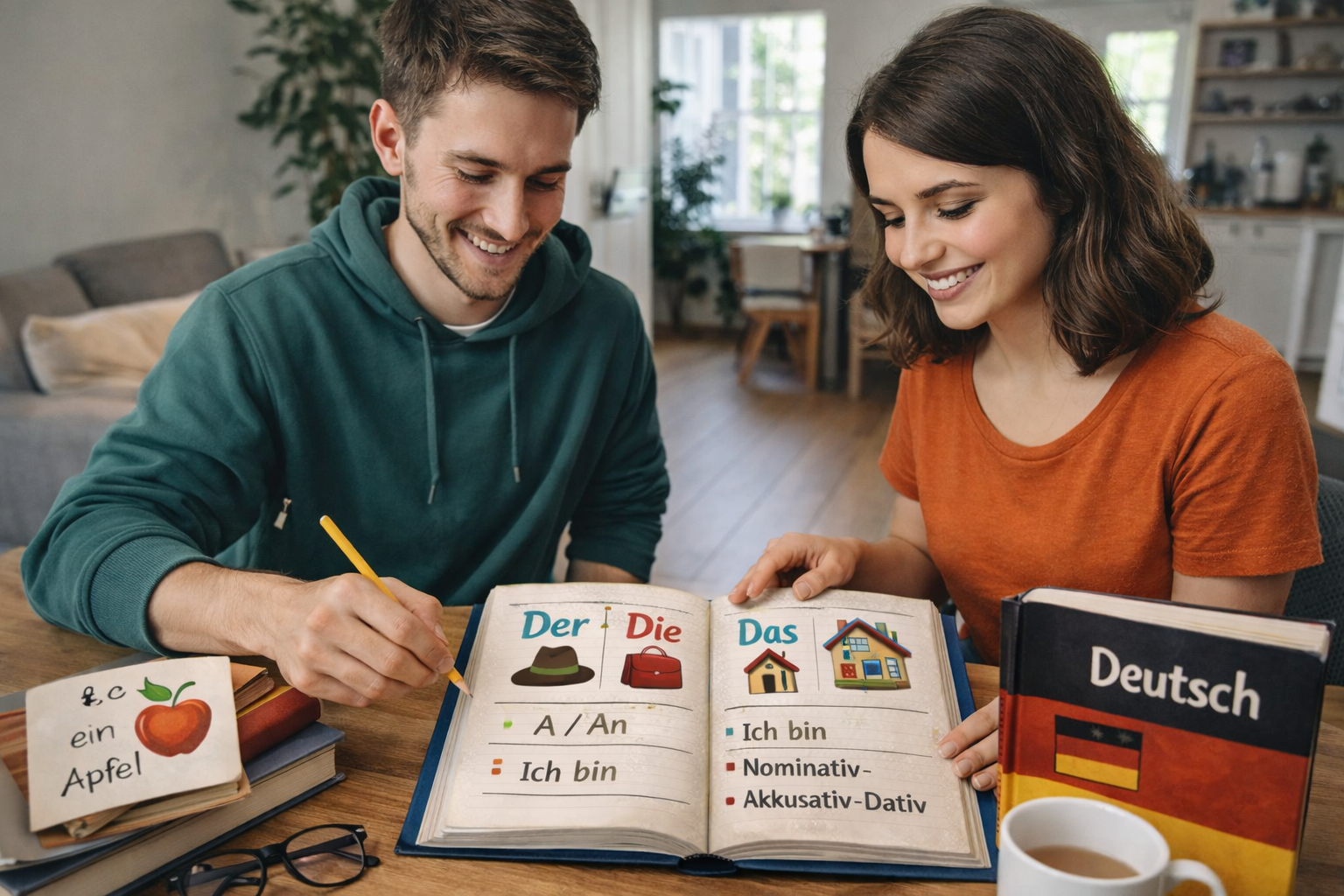
In German, every noun has a gender: masculine, feminine, or neuter. This is an important part of German grammar basics.
-
Masculine – der
-
Feminine – die
-
Neuter – das
It is best to learn each noun along with its article to avoid confusion later.
Definite and Indefinite Articles
German articles change according to gender and sentence structure. Definite articles mean “the,” while indefinite articles mean “a” or “an.” Learning how to use articles correctly is essential for forming accurate sentences.
Basic German Sentence Structure
German sentence structure is different from English. One important rule is that the main verb usually comes in the second position. Understanding this rule is necessary for mastering German Grammar Basics.
Verb Conjugation for Beginners
In German, verbs change according to the subject. This process is called conjugation. Beginners should focus on common verbs in the present tense.
Important verbs include:
sein, haben, gehen, lernen, machen
Regular practice helps you remember verb forms easily.
Understanding German Tenses
German has many tenses, but beginners should first focus on the present tense and the perfect tense. The present tense is used for daily actions, while the perfect tense is used for past events.
Cases in German Grammar
Cases show the role of a word in a sentence. German has four main cases: Nominative, Accusative, Dative, and Genitive. At first, cases may seem difficult, but with practice, they become easier to understand.
Learning cases is a key step in mastering German Grammar Basics.
Plural Forms in German
Plural forms in German do not follow one single rule. Different words use different patterns. Some words add endings, while others change vowels.
Examples:
Mann → Männer
Frau → Frauen
It is helpful to learn plural forms along with new vocabulary.
Adjectives and Descriptions
Adjectives in German change based on gender, case, and articles. These endings may seem complicated at first, but regular practice makes them easier.
Example:
ein guter Lehrer
(a good teacher)
Using adjectives correctly helps you describe people and things more clearly.
Prepositions in German Language
Prepositions show relationships between words, such as place, time, and direction. Common German prepositions include in, auf, mit, von, and für. Some prepositions require specific cases, which is an important part of German Grammar Basics.
Common Grammar Mistakes by Beginners
Many beginners make similar mistakes while learning German. These include using the wrong article, placing verbs incorrectly, confusing cases, and translating directly from English. Avoiding these mistakes early helps you learn faster and speak more confidently.
How to Practice German Grammar Daily
Learning grammar rules is not enough. You must use them regularly in real situations. Daily practice improves memory and understanding.
You can practice by:
-
Writing short sentences
-
Watching German videos
-
Speaking with language partners
-
Using grammar apps
Consistency is more important than studying for long hours.
Best Resources for Learning German
Today, many learning resources are available online. These include language apps, online courses, YouTube tutorials, grammar books, and practice websites. Using different resources helps you understand grammar from multiple angles.
Benefits of Learning German Grammar
When you master German Grammar Basics, you can communicate clearly and professionally. Good grammar improves your confidence in exams, interviews, and daily conversations. It also helps you understand complex texts and native speech more easily.
Final Conclusion
Learning German grammar does not have to be difficult. With the right approach, regular practice, and patience, anyone can improve their skills. Focus on building a strong foundation with German Grammar Basics, and your language journey will become smoother and more enjoyable.

fluconazole 200 mg
fluconazole 200 mg
每天都在战争,希望2026和平.
Very good i like it