
How to Learn German Fast in 3 Months
How to Learn German Fast in 3 Months: Complete German Learning Roadmap for Beginners
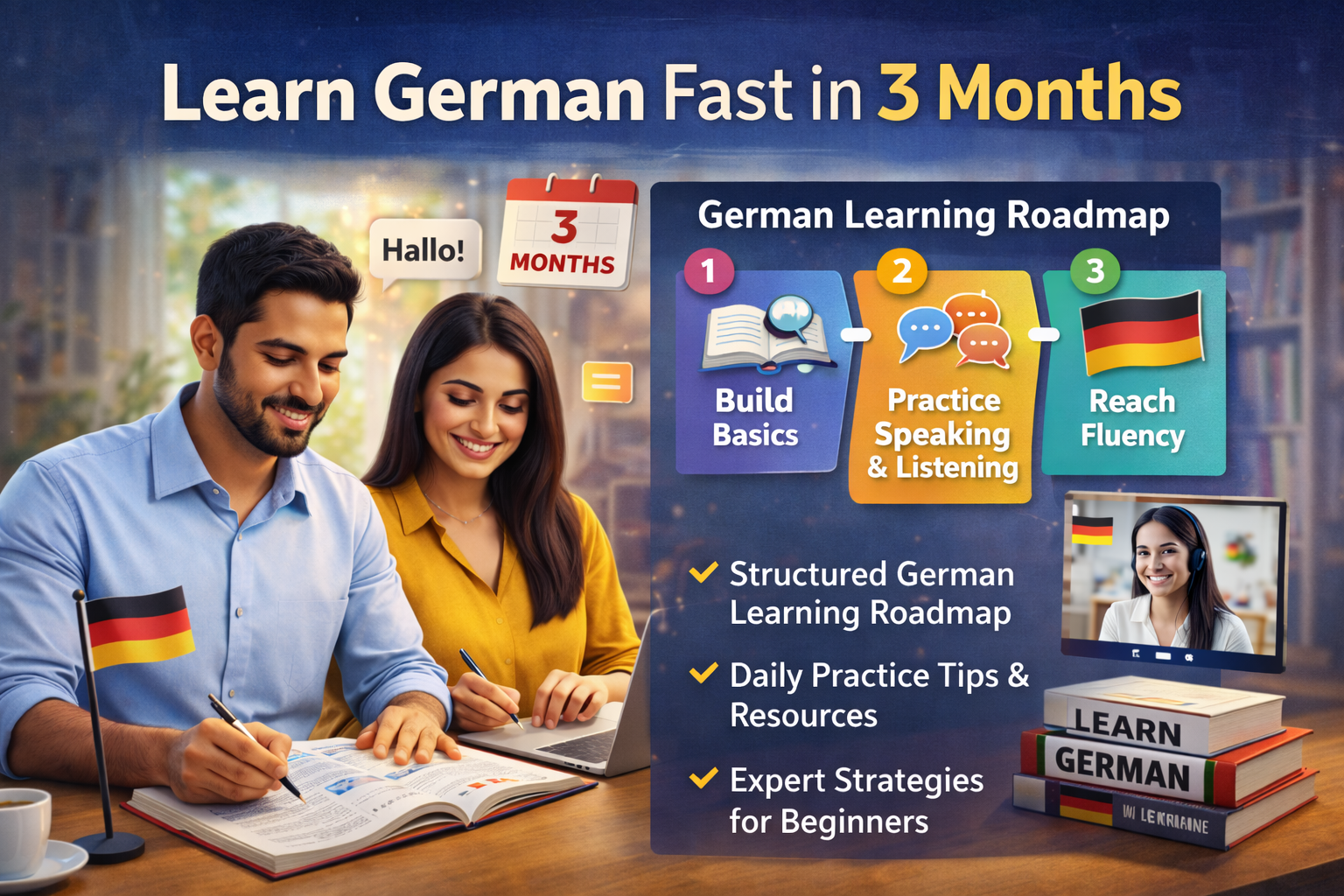
Learning German in three months may sound challenging, but with the right strategy and daily practice, it becomes achievable. Many students and professionals successfully Learn German Fast by following a structured plan and focusing on practical communication instead of memorizing random rules. German is one of the most important languages for career growth, education, and international opportunities. A proper German Learning Roadmap helps learners stay focused, avoid confusion, and achieve measurable progress in a short time.
Why Learning German Fast Is Possible with the Right Strategy
Language learning depends more on consistency than talent. Many people believe that learning German takes years, but focused learners can build strong conversational skills within three months. German has logical grammar rules and consistent pronunciation patterns, which make learning easier compared to many other languages. With daily practice, structured lessons, and real-life usage, learners can understand and speak German confidently. The key is to follow a clear German Learning Roadmap and avoid wasting time on unstructured learning methods.
Understanding the German Language Basics First
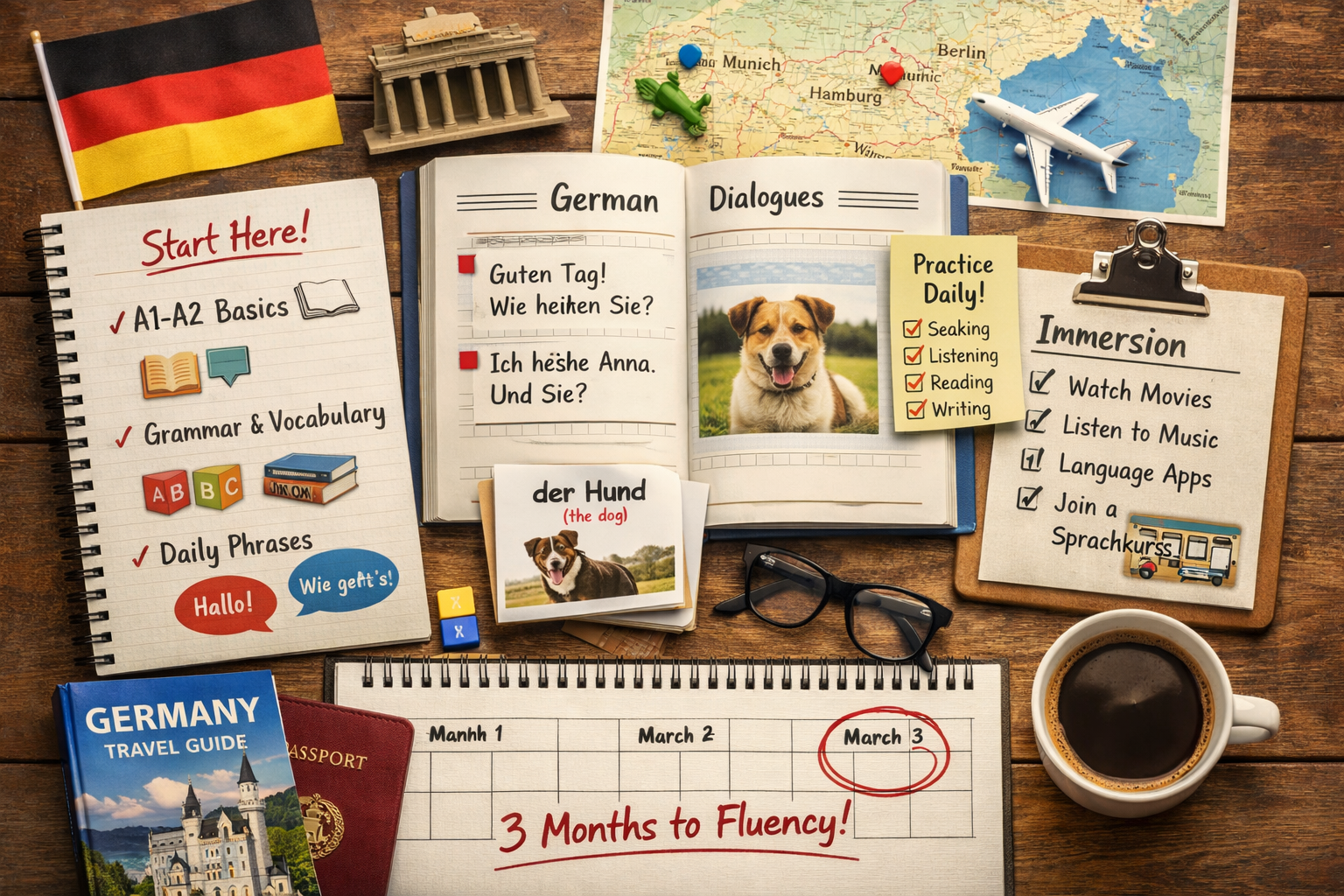
Before trying to Learn German Fast, learners must understand the foundation. This includes the German alphabet, pronunciation, sentence structure, and basic grammar. German pronunciation follows predictable rules, which helps learners read and speak correctly. Learning common words and basic sentence patterns allows beginners to start communicating early. Understanding these fundamentals builds confidence and makes advanced learning easier later.
Building Daily Vocabulary for Faster Progress
Vocabulary is the backbone of language learning. Without words, communication becomes impossible. Learners should focus on learning daily-use vocabulary, including greetings, numbers, verbs, and common expressions. Learning 20–30 words per day can create a strong vocabulary base within three months. Repeating and using new words regularly improves memory and recall speed. Vocabulary practice plays a major role in helping learners Learn German Fast and communicate effectively.
Importance of Speaking Practice from Day One
Speaking practice is the most important part of language learning. Many learners understand German but hesitate to speak because of fear of mistakes. Speaking regularly improves confidence, pronunciation, and fluency. Learners should practice speaking with teachers, friends, or language partners. Even speaking simple sentences daily can create significant improvement. Real communication strengthens language skills faster than passive learning.
Listening Practice Helps Improve Understanding
Listening helps learners understand how German sounds in real conversations. Listening to German podcasts, videos, and conversations improves comprehension skills. It trains the brain to recognize pronunciation, tone, and sentence structure. Listening practice also improves speaking ability because learners naturally copy correct pronunciation. This method helps learners Learn German Fast and communicate naturally.
Following a Structured German Learning Roadmap
A structured roadmap provides direction and prevents confusion. Learners should divide their three-month journey into stages.
Month 1 focuses on basics, including vocabulary, pronunciation, and grammar.
>Month 3 focuses on conversation, reading, and fluency improvement.
Creating a Daily Study Routine for Consistent Progress
Consistency is more important than long study hours. A daily routine helps learners stay focused and disciplined. A simple routine may include vocabulary practice, grammar exercises, listening practice, and speaking exercises. Even 60–90 minutes of daily practice can deliver strong results. Regular study builds momentum and improves retention.
Using Technology and Online Resources for Faster Learning
Technology provides powerful tools for language learning. Online courses, mobile apps, and video lessons help learners practice anytime and anywhere. These tools provide structured lessons, exercises, and progress tracking. However, learners should use limited and reliable resources to avoid confusion. Technology supports learning, but consistency creates real progress.
Avoiding Common Mistakes While Learning German
Many learners slow down their progress by making common mistakes. These include studying irregularly, avoiding speaking practice, and depending only on theory. Some learners use too many resources, which creates confusion. Others expect instant fluency and lose motivation. Avoiding these mistakes helps learners stay focused and achieve faster results.
Importance of Reading and Writing Practice
Reading improves vocabulary and sentence understanding. Writing helps learners organize thoughts and practice grammar. Reading German articles, stories, or simple texts improves comprehension skills. Writing daily sentences or short paragraphs strengthens language accuracy. These skills help learners Learn German Fast and communicate clearly.
How Immersion Helps Accelerate Learning
Immersion means surrounding yourself with German daily. Watching German videos, listening to German music, and reading German content creates exposure. This trains the brain to think in German naturally. Immersion accelerates learning and improves fluency faster than traditional methods.
Staying Motivated During the Learning Process
Motivation plays an important role in language learning. Learners should set clear goals and track progress regularly. Celebrating small achievements keeps motivation high. Learning with friends or joining classes also improves consistency. Positive mindset and discipline help learners complete their German Learning Roadmap successfully.
Career and Academic Benefits of Learning German
German language skills provide many career opportunities. Many global companies prefer employees who know German. Students can pursue higher education in Germany and Europe. German skills improve job opportunities in IT, engineering, healthcare, and business sectors. Learning German adds value to professional profiles and increases career growth potential.
How Long-Term Practice Leads to Fluency
Three months of focused learning builds a strong foundation. However, fluency improves with continued practice. Learners should continue practicing speaking, listening, reading, and writing after completing initial stages. Long-term consistency leads to mastery and confidence.
Final Thoughts on Learning German Fast in 3 Months
Learning German quickly is possible with the right mindset, structured plan, and daily practice. Learners who follow a proper German Learning Roadmap and focus on real communication achieve faster results. Consistency, speaking practice, and structured learning are the keys to success. Anyone can Learn German Fast by staying disciplined, practicing daily, and following a clear roadmap.

levothyroxine tablets
levothyroxine tablets