

Top 50 Basic German Sentences for Beginners
Top 50 Basic German Sentences for Beginners
German sentences for beginners are the fastest and smartest way to start learning the language without feeling overwhelmed. If you want to improve your German speaking practice, understand German language basics, and build confidence for daily conversations, mastering practical sentences is the perfect starting point. Instead of memorizing isolated vocabulary, learning structured German sentences for beginners helps you understand grammar, pronunciation, and real-life usage together.
Whether you’re preparing for the Goethe A1 exam, planning to study in Germany, or joining a German language course, this complete guide will help you speak simple German from day one.
Why German Sentences for Beginners Matter in Early Learning
When students start learning German, many jump directly into grammar rules. But the smarter approach is to focus on sentence-based learning. Practicing German sentences for beginners improves:
-
Pronunciation and fluency
-
Sentence structure understanding
-
Confidence in conversation
-
Preparation for A1 level speaking tests
-
Everyday communication skills
Learning through sentences naturally builds your foundation in basic German sentences, vocabulary, and word order.
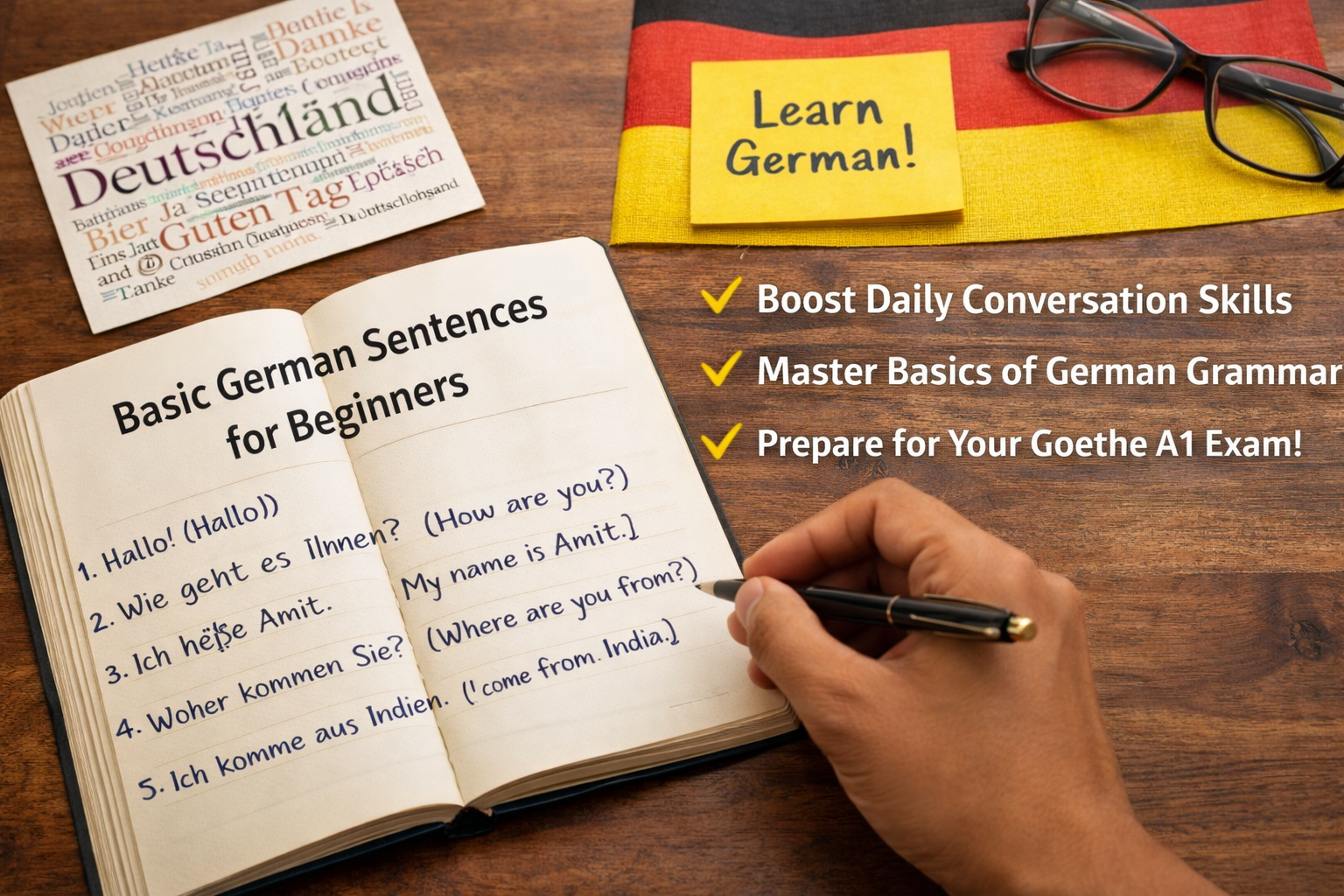
German Sentences for Beginners – Greetings & Introductions
These are essential for first conversations and commonly asked in the Goethe A1 speaking test.
-
Hallo! – Hello!
-
Guten Morgen. – Good morning.
-
Guten Tag. – Good day.
-
Guten Abend. – Good evening.
-
Wie heißen Sie? – What is your name?
-
Ich heiße Aman. – My name is Aman.
-
Wie geht es Ihnen? – How are you?
-
Mir geht es gut. – I am fine.
-
Woher kommen Sie? – Where are you from?
-
Ich komme aus Indien. – I come from India.
Practicing these daily will make introductions smooth and confident.
German Sentences for Beginners – Daily Use Conversations
If you want real-world communication skills, these daily use German sentences are extremely helpful.
-
Sprechen Sie Englisch? – Do you speak English?
-
Ich verstehe nicht. – I don’t understand.
-
Können Sie das bitte wiederholen? – Can you repeat that please?
-
Wie viel kostet das? – How much does this cost?
-
Wo ist die Toilette? – Where is the toilet?
-
Ich habe eine Frage. – I have a question.
-
Entschuldigung. – Excuse me.
-
Es tut mir leid. – I am sorry.
-
Kein Problem. – No problem.
-
Danke schön. – Thank you very much.
These German sentences for beginners help improve everyday communication and are important for survival German situations.
German Sentences for Beginners – School & Workplace
Students planning to study or work in Germany should practice these essential expressions.
-
Ich lerne Deutsch. – I am learning German.
-
Ich brauche Hilfe. – I need help.
-
Können Sie mir helfen? – Can you help me?
-
Ich habe Hausaufgaben. – I have homework.
-
Ich arbeite hier. – I work here.
-
Ich suche einen Job. – I am looking for a job.
-
Ich habe einen Termin. – I have an appointment.
-
Wann beginnt der Kurs? – When does the course start?
-
Ich bin Student. – I am a student.
-
Ich möchte Deutsch sprechen. – I want to speak German.
Using these builds confidence for academic and professional conversations.
German Sentences for Beginners – Travel & Shopping
Traveling becomes much easier when you know these practical German phrases.
-
Wo ist der Bahnhof? – Where is the railway station?
-
Ich möchte ein Ticket kaufen. – I want to buy a ticket.
-
Haben Sie WLAN? – Do you have WiFi?
-
Ich nehme das. – I’ll take this.
-
Das ist zu teuer. – That is too expensive.
-
Gibt es Rabatt? – Is there a discount?
-
Ich habe kein Bargeld. – I don’t have cash.
-
Kann ich mit Karte bezahlen? – Can I pay by card?
-
Wo ist mein Hotel? – Where is my hotel?
-
Ich brauche ein Taxi. – I need a taxi.
These sentences are part of essential basic German sentences every beginner must know.
German Sentences for Beginners – Expressing Feelings
To sound more natural, you should also know how to express emotions.
-
Ich bin müde. – I am tired.
-
Ich bin glücklich. – I am happy.
-
Ich habe Hunger. – I am hungry.
-
Ich habe Durst. – I am thirsty.
-
Ich mag Deutschland. – I like Germany.
-
Ich liebe Deutsch. – I love German.
-
Das gefällt mir. – I like that.
-
Das ist interessant. – That is interesting.
-
Ich stimme zu. – I agree.
-
Ich verstehe jetzt. – I understand now.
Mastering these German sentences for beginners improves natural conversation flow and fluency.
How to Practice German Sentences for Beginners Effectively
Simply reading the sentences is not enough. You must actively practice them.
Speak Daily
German pronunciation improves only when you speak consistently.
Record and Compare
Recording your voice helps correct mistakes in pronunciation.
Use Flashcards
Flashcards are powerful for memorizing daily use German sentences.
Focus on Word Order
German grammar basics, especially verb placement, are important. Observe patterns while practicing.
Common Mistakes While Learning Basic German Sentences
Many beginners:
-
Translate directly from Hindi or English
-
Avoid speaking practice
-
Memorize vocabulary without context
-
Ignore pronunciation
Instead, focus on structured German sentences for beginners, because they naturally teach vocabulary, grammar, and communication together.
Final Thoughts
Learning German becomes easier when you start with practical and conversational content. These German sentences for beginners provide a strong base for speaking confidently in daily life, exams, or while preparing for study in Germany.
Practice regularly. Repeat aloud. Use them in conversations. With consistency, fluency will follow naturally.
If you want structured guidance, live speaking sessions, and exam-focused preparation, joining a professional German language course can accelerate your progress significantly.

hello world
hello world
cefixime 200mg
cefixime 200mg
dapoxetine 30mg
dapoxetine 30mg
actigall
actigall
lasix medicine
lasix medicine