
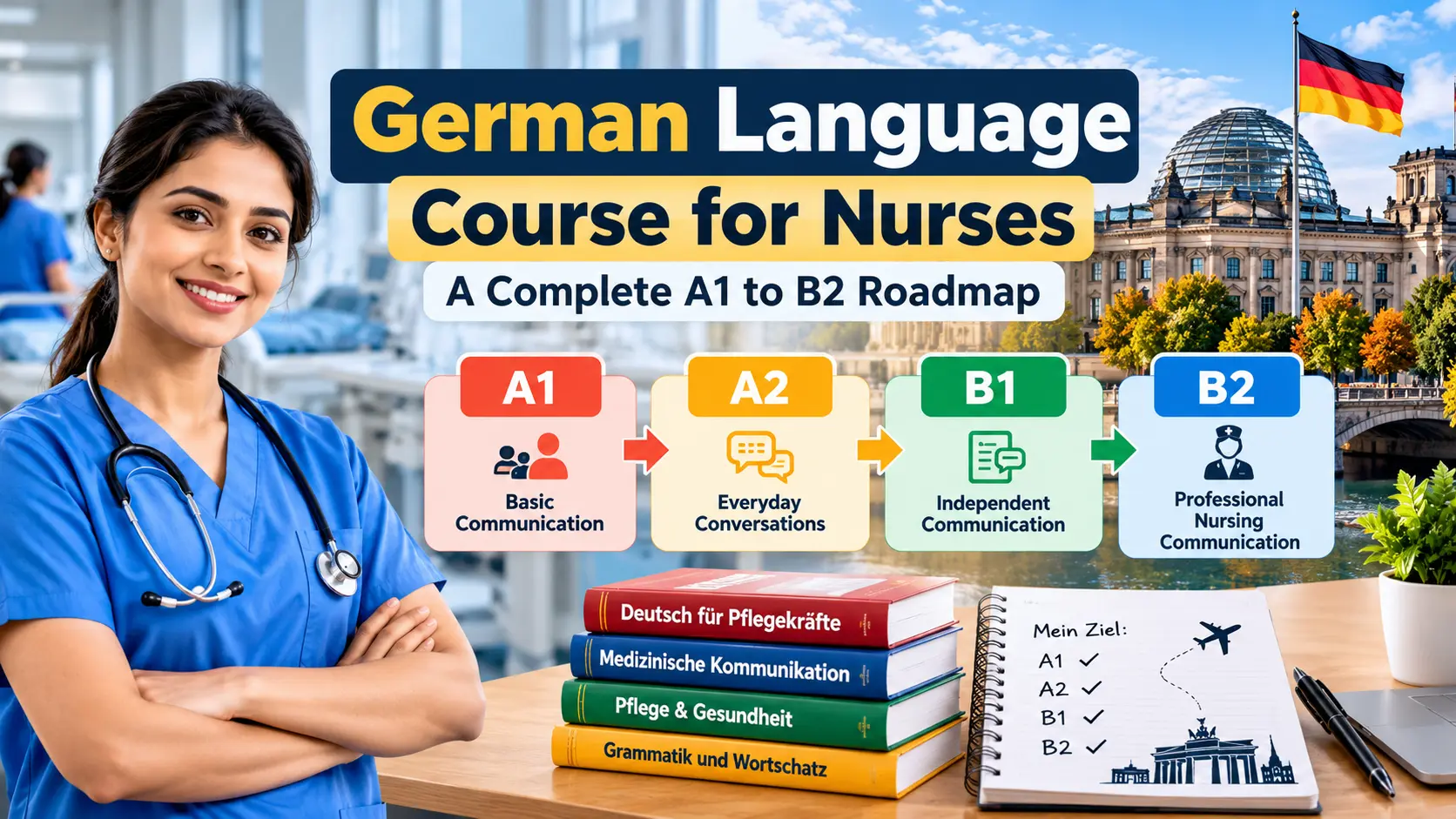
German Language Course for Nurses: A Complete A1 to B2 Roadmap
German Language Course for Nurses: Complete Guide
Introduction
Germany has become a popular destination for Indian nurses who want to build an international career. With opportunities in hospitals, nursing homes, and healthcare facilities, a German Language Course for Nurses can help nurses develop professional communication skills and prepare for the recognition process.
A German Language Course for Nurses helps learners develop the language skills needed to communicate with patients, colleagues, and healthcare professionals in Germany. It also prepares them for the language examinations that may be required during the nursing recognition process.
In this guide, you will learn about German language levels, course structure, nursing vocabulary, exam preparation, and how to plan your learning journey from A1 to B2.
Why Do Indian Nurses Need to Learn German?
German language skills are important for nurses planning to work in Germany because nursing involves regular communication with patients and medical teams.
Nurses may need German to:
-
Understand patients’ symptoms and concerns.
-
Communicate with doctors and other healthcare professionals.
-
Explain basic care procedures to patients.
-
Read instructions and healthcare-related documents.
-
Maintain patient records and share information with colleagues.
-
Prepare for language examinations and professional requirements.
The exact language and recognition requirements can depend on the relevant German authority and the nurse’s individual circumstances.
For official information about nursing opportunities in Germany, visit Make it in Germany – Nursing Professionals.
German Language Levels for Nurses: A1 to B2
German language learning generally follows the Common European Framework of Reference for Languages (CEFR). The levels progress from A1 for beginners to C2 for advanced users.
For nurses planning to work in Germany, A1 to B2 is a common learning pathway.
A1 German: Beginner Level
At A1, learners develop basic communication skills.
You will learn:
-
Introducing yourself and others.
-
Talking about your family and daily routine.
-
Asking and answering simple questions.
-
Understanding basic instructions.
-
Using common greetings and expressions.
A1 provides the foundation for further German learning.
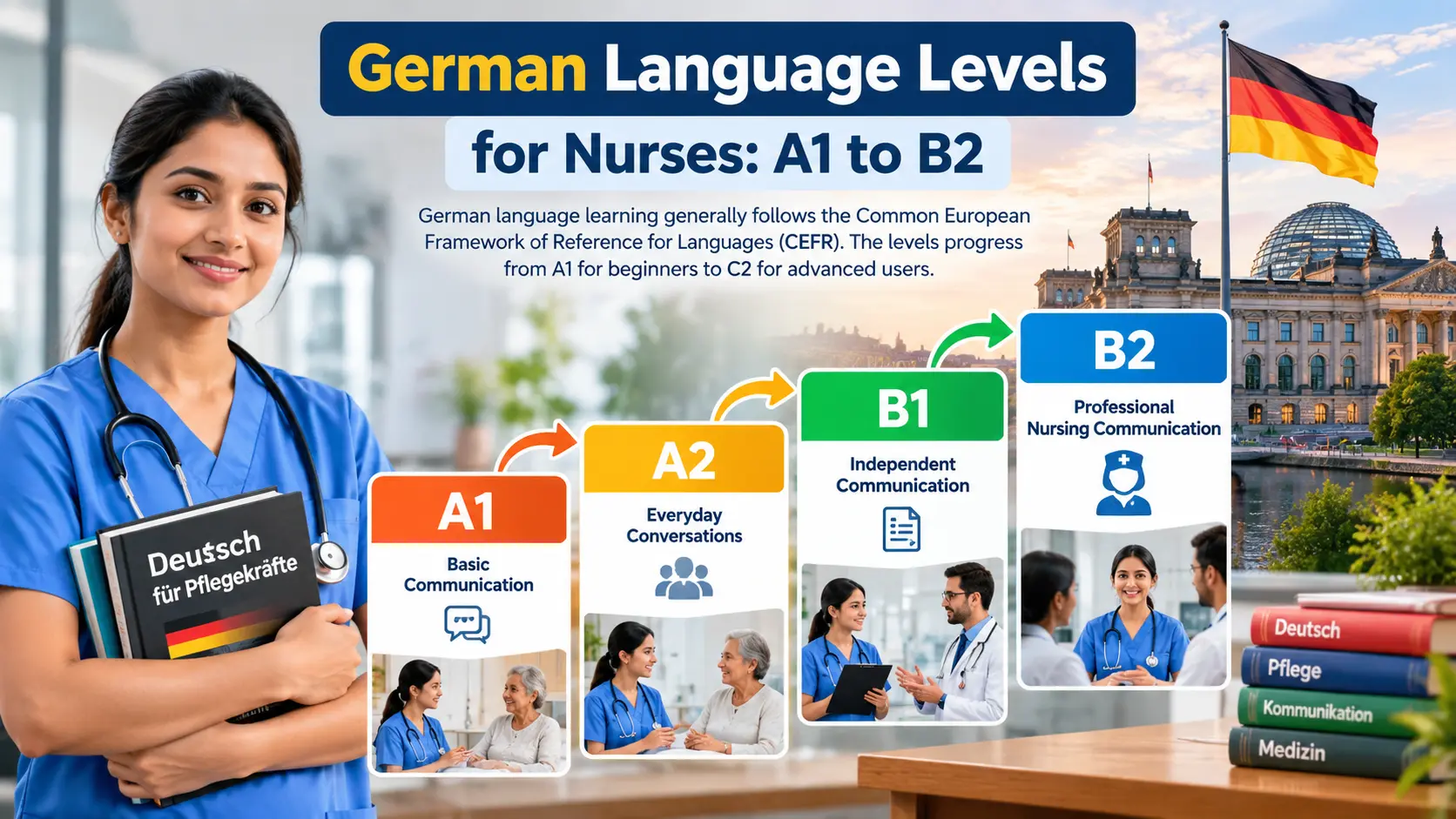
A2 German: Elementary Level
At A2, learners improve their ability to communicate in familiar situations.
You will learn:
-
Discussing everyday activities.
-
Describing simple health-related problems.
-
Understanding common workplace expressions.
-
Asking for information and clarification.
-
Building basic sentences with improved grammar.
You can explore the German A1 and A2 Course to understand the beginner-level learning pathway.
B1 German: Intermediate Level
B1 helps learners communicate more independently in everyday and familiar professional situations.
At this level, you will practise:
-
Explaining situations in greater detail.
-
Understanding conversations on familiar topics.
-
Describing symptoms and health concerns.
-
Communicating with patients using simple language.
-
Expressing opinions and explaining experiences.
B1 is an important step towards developing the communication skills needed in a German-speaking healthcare environment.
B2 German: Upper-Intermediate Level
B2 focuses on more confident and detailed communication.
Nurses may need to demonstrate B2-level German for certain recognition or employment pathways. However, the accepted certificate and exact requirements should always be confirmed with the competent authority.
At B2, learners practise:
-
Understanding detailed conversations.
-
Explaining healthcare-related information.
-
Communicating more confidently with patients and colleagues.
-
Discussing professional situations.
-
Understanding complex texts and instructions.
A structured German Language Course for Nurses can help learners progress through these levels with a focus on both general German and healthcare communication.
German Language Requirements for Nurses in Germany
The requirements for working as a nurse in Germany may involve professional qualification recognition, language proficiency, and other documentation.
The process can vary depending on the federal state, qualification, and competent authority.
Before beginning the process, nurses should check:
-
Which authority is responsible for their recognition application.
-
Which German language level is required.
-
Which language certificates are accepted.
-
Whether a specialised nursing language examination is required.
-
Which documents are needed for the application.
For official guidance, visit Recognition in Germany.
German Nursing Vocabulary Every Nurse Should Learn
Learning nursing-related vocabulary can help students understand healthcare conversations and communicate more effectively.
Here are some useful German words:
|
German Word |
English Meaning |
|---|---|
|
der Patient |
Patient |
|
die Patientin |
Female patient |
|
die Pflege |
Care / Nursing |
|
die Krankenschwester |
Nurse |
|
der Krankenpfleger |
Male nurse |
|
der Arzt |
Doctor |
|
die Ärztin |
Female doctor |
|
das Krankenhaus |
Hospital |
|
die Schmerzen |
Pain |
|
das Fieber |
Fever |
|
die Medikamente |
Medicines |
|
die Untersuchung |
Examination |
|
die Behandlung |
Treatment |
|
der Blutdruck |
Blood pressure |
|
die Temperatur |
Temperature |
Along with vocabulary, nurses should practise complete sentences that are commonly used in healthcare settings.
Useful German Sentences for Nurses
-
Haben Sie Schmerzen? — Are you in pain?
-
Wo haben Sie Schmerzen? — Where do you have pain?
-
Haben Sie Fieber? — Do you have a fever?
-
Ich messe Ihren Blutdruck. — I am measuring your blood pressure.
-
Bitte nehmen Sie dieses Medikament. — Please take this medicine.
-
Wie fühlen Sie sich heute? — How are you feeling today?
-
Ich helfe Ihnen. — I will help you.
Regular practice of these expressions can improve confidence in basic patient communication.
How to Prepare for German Language Exams
German language examinations assess reading, listening, writing, and speaking skills. Some examinations are designed for general German proficiency, while others focus on professional contexts.
Two examination options learners may research are:
Goethe-Zertifikat B2
The Goethe-Zertifikat B2 assesses German language skills at B2 level. It includes reading, listening, writing, and speaking modules.
Learn more from the official Goethe-Zertifikat B2 page.
telc Deutsch B1·B2 Pflege
This examination is designed for people working or planning to work in nursing-related environments. It focuses on language used in professional nursing contexts.
Check the official telc German B1·B2 Nursing examination page.
Before choosing an examination, confirm which certificate is accepted by the relevant recognition authority.
How Long Does It Take to Learn German from A1 to B2?
The time required to reach B2 depends on several factors, including study hours, learning consistency, practice methods, and previous language-learning experience.
A general learning roadmap may look like this:
|
German Level |
Learning Focus |
|---|---|
|
A1 |
Basic vocabulary, introductions, simple sentences |
|
A2 |
Everyday communication and elementary grammar |
|
B1 |
Independent communication and longer conversations |
|
B2 |
Detailed communication and professional language |
Some learners progress faster with regular classes and daily practice, while others need more time.
Read more about the time required to learn German from A1 to B2.
How to Choose the Right German Course for Nurses
Choosing a suitable course is an important step in your learning journey.
Before enrolling, consider the following points:
-
Structured curriculum: The course should follow a clear A1-to-B2 learning path.
-
Qualified trainers: Check the trainers’ German language teaching experience.
-
Speaking practice: Regular speaking activities can help improve communication.
-
Grammar and vocabulary: Both are essential for developing accurate German.
-
Exam preparation: Check whether the course includes practice for relevant language examinations.
-
Healthcare-related language: Nursing vocabulary and professional communication should be part of your preparation.
A suitable German Language Course for Nurses should help learners build strong general German skills while gradually introducing nursing-related communication.
You can explore Germanacharya’s nursing course information and available German courses to learn more about the training options.

Daily Study Plan for Nurses Learning German
A consistent study routine can make language learning more manageable.
Here is a sample daily plan:
|
Activity |
Suggested Time |
|---|---|
|
German vocabulary |
15 minutes |
|
Grammar practice |
20 minutes |
|
Listening practice |
15 minutes |
|
Speaking practice |
20 minutes |
|
Reading or writing |
20 minutes |
You can also spend a few minutes revising nursing vocabulary and practising patient-related sentences.
The most important factor is consistency. Regular practice helps learners remember vocabulary, improve sentence formation, and develop confidence.
Why Choose Germanacharya for German Language Learning?
Germanacharya provides German language learning resources for students who want to develop their German skills.
Learners can explore course information, grammar resources, and nursing-related German learning options.
To understand the nursing-focused learning pathway, visit Germanacharya Nursing.
You can also read the complete guide to A1 German grammar to strengthen your foundation.
Frequently Asked Questions
1. Which German level is required for nurses in Germany?
B2 German is commonly required in many nursing recognition pathways. However, the exact requirement and accepted certificate depend on the competent authority and individual case.
2. Can Indian nurses learn German from A1 to B2?
Yes. Indian nurses can follow a structured learning path from A1 to B2 through regular classes, self-study, listening practice, and speaking exercises.
3. Is German difficult for nursing professionals?
German requires consistent practice, especially grammar, sentence structure, and pronunciation. Learning healthcare-related vocabulary alongside general German can make the process more relevant to nursing professionals.
4. Which German exam should nurses prepare for?
Nurses may consider general B2 examinations or specialised nursing language examinations, depending on the requirements of the relevant authority. Always verify the accepted certificate before booking an exam.
5. Can I learn German while working as a nurse?
Yes. Working nurses can study through a planned routine, such as attending classes and practising German daily. A consistent schedule can help balance professional responsibilities and language learning.
6. Does a German language certificate guarantee a nursing job in Germany?
No. A language certificate alone does not guarantee employment or professional recognition. Nurses may also need qualification recognition, documentation, and other approvals.
Conclusion
Learning German is an important part of preparing for a nursing career in Germany. From basic communication at A1 to professional-level language skills at B2, each stage helps nurses develop the confidence needed to communicate in German-speaking environments.
A structured German Language Course for Nurses can support this journey through grammar, vocabulary, speaking practice, and exam preparation. Before starting the recognition process, always check the latest requirements with the relevant German authority.
For course details and nursing-focused German learning resources, visit Germanacharya.

Quick access and no hassle with the account setup. It’s rare to find such a user-friendly site these days. Glad I found yy567login.
I was struggling to get back into my account but this alternative link saved the day. Super easy to navigate. Check out zuma78linkalternatif if you are having access issues.
Best experience I’ve had with an online site lately. The games at bdfc777 are super smooth and the bonuses are legit.
Finally found a version that doesn’t lag. The installation was a breeze and everything works perfectly on my phone. Highly recommend inyono777download if you want a stable app.