

Finding an Apartment Germany: SCHUFA & Scam Guide
Finding an Apartment in Germany: SCHUFA, Rental Documents & Scam-Proofing Guide for Indians (2026)
Finding an apartment Germany newcomers dread usually comes down to two fears. One is SCHUFA. The other is getting scammed before you’ve even landed. Both are real concerns, but neither has to derail your move. This guide covers what SCHUFA means for someone with zero German credit history, which documents you’ll actually need, and how to spot a rental scam before it costs you money.
What Is SCHUFA, and Why It Decides Your Apartment
SCHUFA is Germany’s dominant credit bureau. It tracks payment behaviour for roughly 68 million people. Most landlords request a SCHUFA report as part of any serious rental application. A clean report often becomes the deciding factor between two similar applicants, especially in competitive cities.
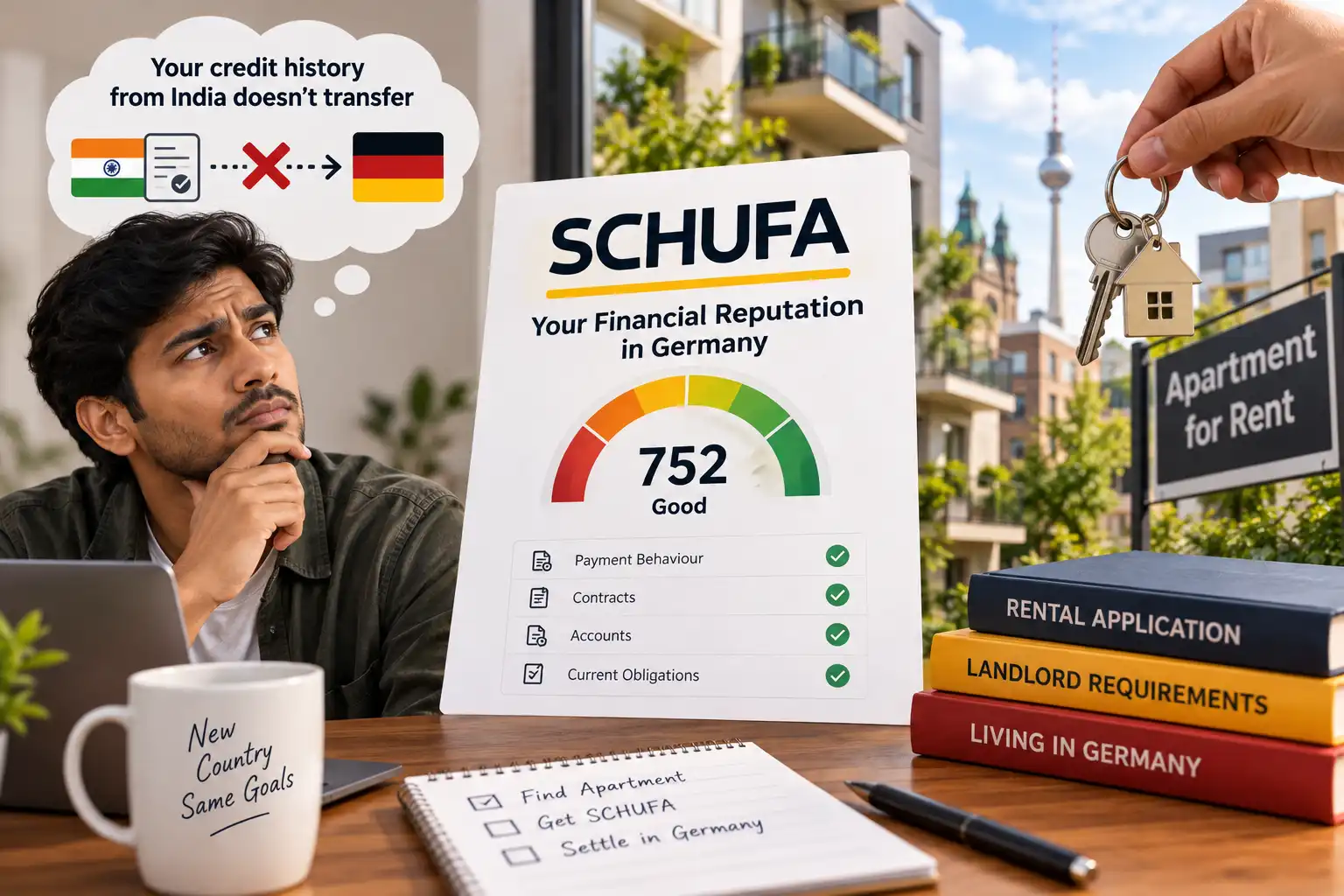
Here’s the part that surprises most newcomers. Your credit history from India, or anywhere else, doesn’t transfer. Germany’s system runs in complete isolation. A great record back home means nothing to SCHUFA on day one.
The 2026 SCHUFA Score: What Changed
Since March 2026, SCHUFA uses a new scoring system. Scores now run from 100 to 999 points, based on 12 defined criteria. This replaces the older percentage-based model. Landlords generally want to see a score in the Good range (709+) or higher.
You can check your own score for free at any time, through SCHUFA’s website, once you’ve completed identity verification. You’re also entitled to one free full data copy a year under GDPR rules.
The Newcomer Catch-22, and How to Break It
Here’s the frustrating part. You often need an address to open a bank account and start building a SCHUFA file. You often need housing to get that address. New arrivals get stuck in this loop constantly.
The fix isn’t complicated, though. Having no SCHUFA history is not the same as having a bad one. Landlords generally understand this distinction. Many flatshares and furnished, relocation-focused rentals skip SCHUFA entirely for exactly this reason. Use one of those as your first stop. Register your address, open a bank account, and your SCHUFA file starts building from there.
Documents You’ll Actually Need to Apply
- Passport and visa or residence permit
- Proof of income: recent payslips, an employment contract, a scholarship letter, or blocked account confirmation for students
- SCHUFA-Bonitätsauskunft, once you have one — or a clear written explanation if you don’t yet
- Mieterselbstauskunft, the standard tenant self-disclosure form most landlords provide
- A guarantor (Bürge) or extra bank statements, if you’re applying without a SCHUFA history
Finding an Apartment Germany: Where to Start Looking
Full, unfurnished long-term apartments are the hardest category for newcomers to land quickly. A WG (Wohngemeinschaft, or shared flat) is usually faster and cheaper. It’s also far more flexible about SCHUFA and income proof. Furnished or relocation-focused rentals form a third option, ideal for your first few weeks while you keep searching.

Treat your first home in Germany as a bridge, not a final destination. Most newcomers move again within their first year anyway, once they have a stronger application file.
Scam-Proofing: The Red Flags That Should Stop You Cold
Rental fraud specifically targets people under time pressure. Newcomers on a visa deadline fit that profile perfectly. Watch for these patterns:
- A landlord who claims to be “abroad” and can’t show the apartment in person or on a verified video call
- Rent priced well below comparable listings in the same area
- Pressure to pay a deposit or first month’s rent before you’ve seen a signed contract
- Requests to pay via Western Union, cryptocurrency, or any untraceable method
- Communication that shifts to WhatsApp immediately, avoiding phone calls entirely
Safe Platforms vs Risky Ones for Finding an Apartment Germany
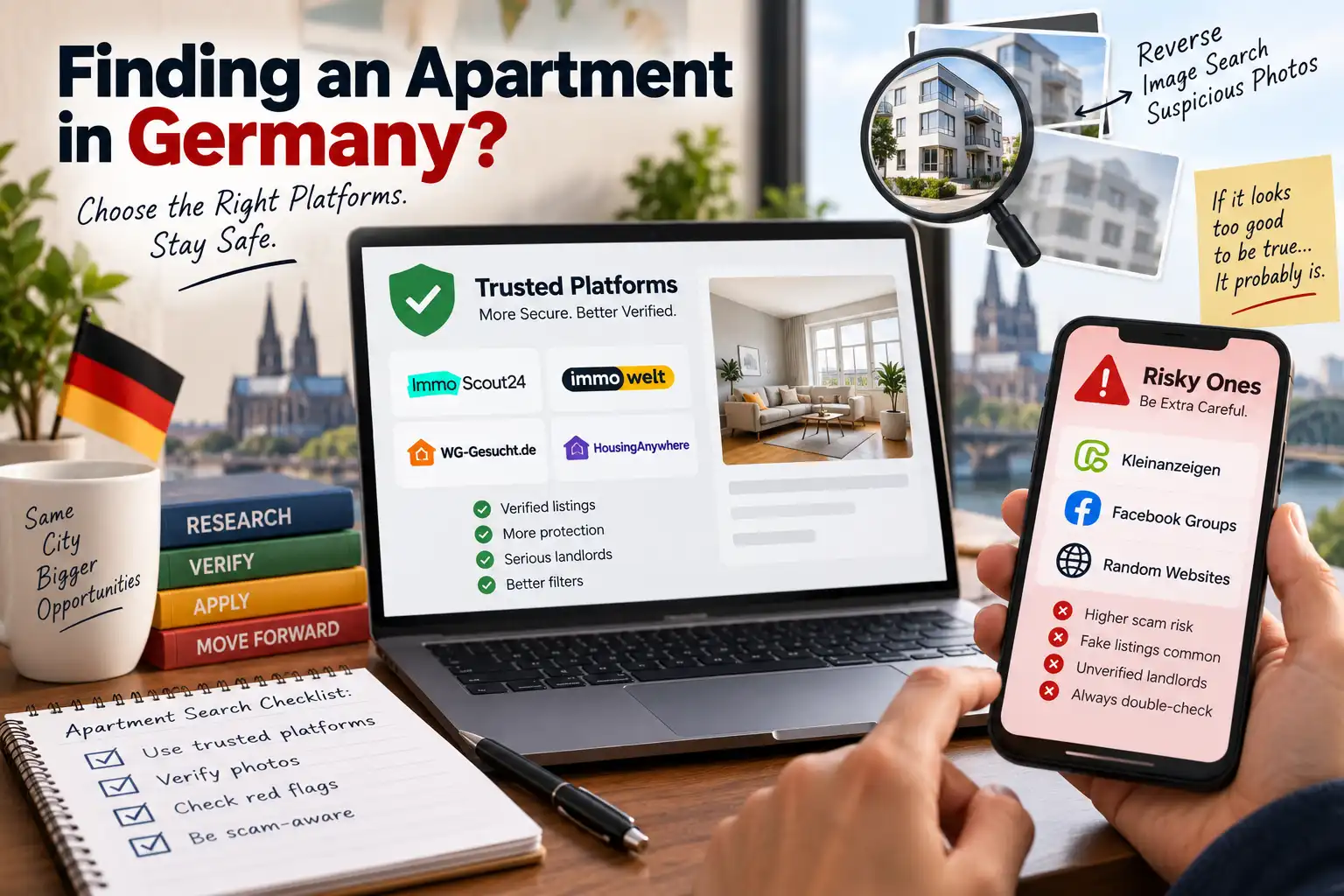
Established platforms like ImmobilienScout24 offer more protection than random listings on Kleinanzeigen or Facebook groups. That said, scammers do occasionally slip fake listings onto legitimate sites too. Reverse-image-search suspicious photos when something feels off. If a listing seems unusually generic, or the photos look like stock images, treat that as a warning sign, not a coincidence.
Kaltmiete vs Warmmiete: Don’t Get Caught Out
German listings usually quote Kaltmiete, the cold or base rent, separately from Warmmiete, which includes utilities. Budgeting off the Kaltmiete figure alone is a common newcomer mistake. Always confirm which number you’re looking at, before comparing listings against each other.
Kaution (Deposit): What’s Normal and What Isn’t
A security deposit of up to three months’ Kaltmiete is standard and legal in Germany. Anything more than that is worth questioning. Never hand over a deposit before you’ve signed a proper written contract. This holds true regardless of how convincing the explanation sounds.
Finding an Apartment Germany: A Realistic Week-by-Week Plan
- Book short-term or furnished housing for your first few weeks, before you even land.
- Complete your Anmeldung as soon as you have any registered address.
- Open a German bank account, which starts your SCHUFA file building.
- Prepare your document pack, including a written explanation if your SCHUFA is still empty.
- Start applying to WGs or flexible rentals while your credit file develops.
- Move toward a long-term unfurnished apartment once you have a few months of German financial history behind you.
Common Mistakes Indians Make
- Assuming a strong credit history back home will help with SCHUFA — it won’t
- Paying any money before a signed contract exists, no matter how urgent the deadline feels
- Chasing full unfurnished apartments immediately, instead of using a WG as a stepping stone
- Confusing Kaltmiete with the total monthly cost, then getting a budgeting shock
- Ignoring obvious red flags because the listing photos looked genuinely nice
FAQs on Finding an Apartment in Germany
Can I rent an apartment in Germany with no SCHUFA history?
Yes, in many cases. Flatshares and furnished or relocation-focused rentals often skip SCHUFA entirely. Some landlords accept alternative proof, like payslips or bank statements, instead.
Does my credit score from India count for anything in Germany?
No. SCHUFA and foreign credit bureaus don’t share data. Your history starts from zero, regardless of how strong it was back home.
What’s the biggest rental scam red flag to watch for?
Any request for payment before you’ve seen a signed contract. This is especially dangerous when combined with a landlord who claims to be abroad and unavailable for a proper viewing.
How long does it take to build a usable SCHUFA file?
Most newcomers see a usable score within three to six months. Open a bank account, then pay bills like rent and phone contracts on time.
Final Thoughts
Finding an apartment Germany newcomers worry about isn’t really about SCHUFA itself. It’s about understanding that an empty file is normal, not a red flag. Start with flexible housing, and build your financial footprint from there. Treat every payment-before-contract request as a hard stop, no matter how convincing the story sounds.
If you’re preparing for your move, explore Germanacharya’s German courses to get comfortable handling exactly these kinds of official processes in German. Book a free 1:1 consultation to talk through your specific timeline, or browse more guides on our blog.
For official information, see the Verbraucherzentrale’s guide to spotting fake apartment listings. Check your own score directly through SCHUFA’s official portal.

Had some trouble finding the right link before but this one works perfectly. Very fast login and the site is very stable. Cheers to mustang77login.
Just having a blast on this site! The community is great and the winning streaks are feeling real today. So much fun at br777betfun
The excitement on this site is on another level. I had a great run yesterday and the withdrawal was processed almost instantly. Great job brcupwin
I finally found a place that treats its players like family rather than just account numbers. The mobile experience is seamless and withdrawals land in my wallet before I finish my morning coffee. Reliable and refreshing all at once. situsjitu26
Finally found a site that actually pays out on time. The interface is super friendly and I had no issues setting up my account. Check out ayam11 if you want a stress-free experience.