
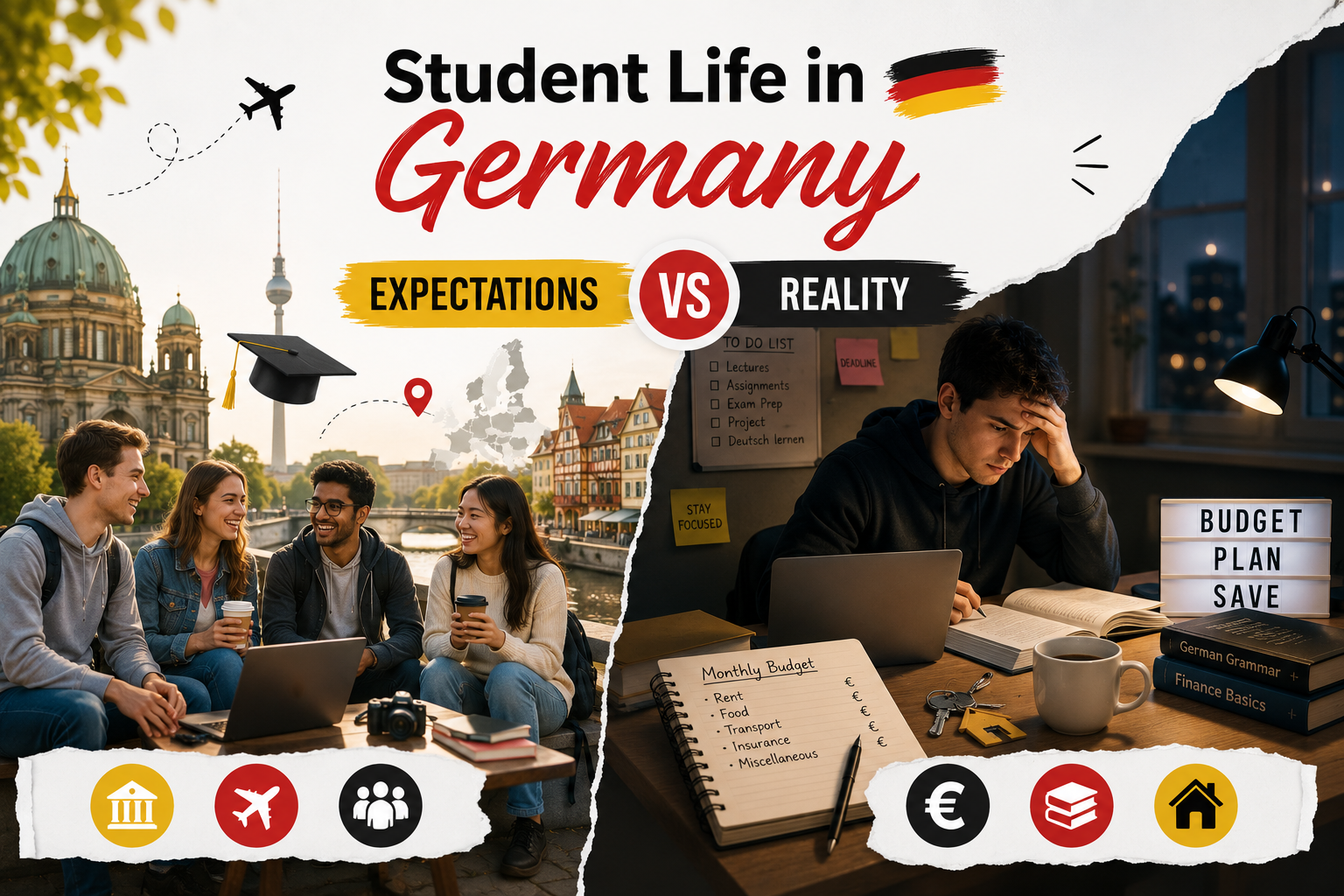
Student Life in Germany: Expectations vs Reality
Student Life in Germany is often imagined as a journey filled with world-class universities, affordable education, beautiful cities, weekend trips across Europe, and exciting career opportunities. Germany is one of the most popular destinations for international students.
Every year, thousands of students move to Germany with dreams of world-class education, affordable tuition fees, exciting travel opportunities, and a better future. However, life in Germany is often different from what students imagine before arriving.
Many students expect a smooth transition, but the reality includes cultural adjustments, language barriers, academic pressure, and financial planning. Understanding both sides before moving can help you prepare better and avoid common surprises.
In this guide, we compare the expectations and realities of student life in Germany so you can start your journey with realistic goals and confidence.
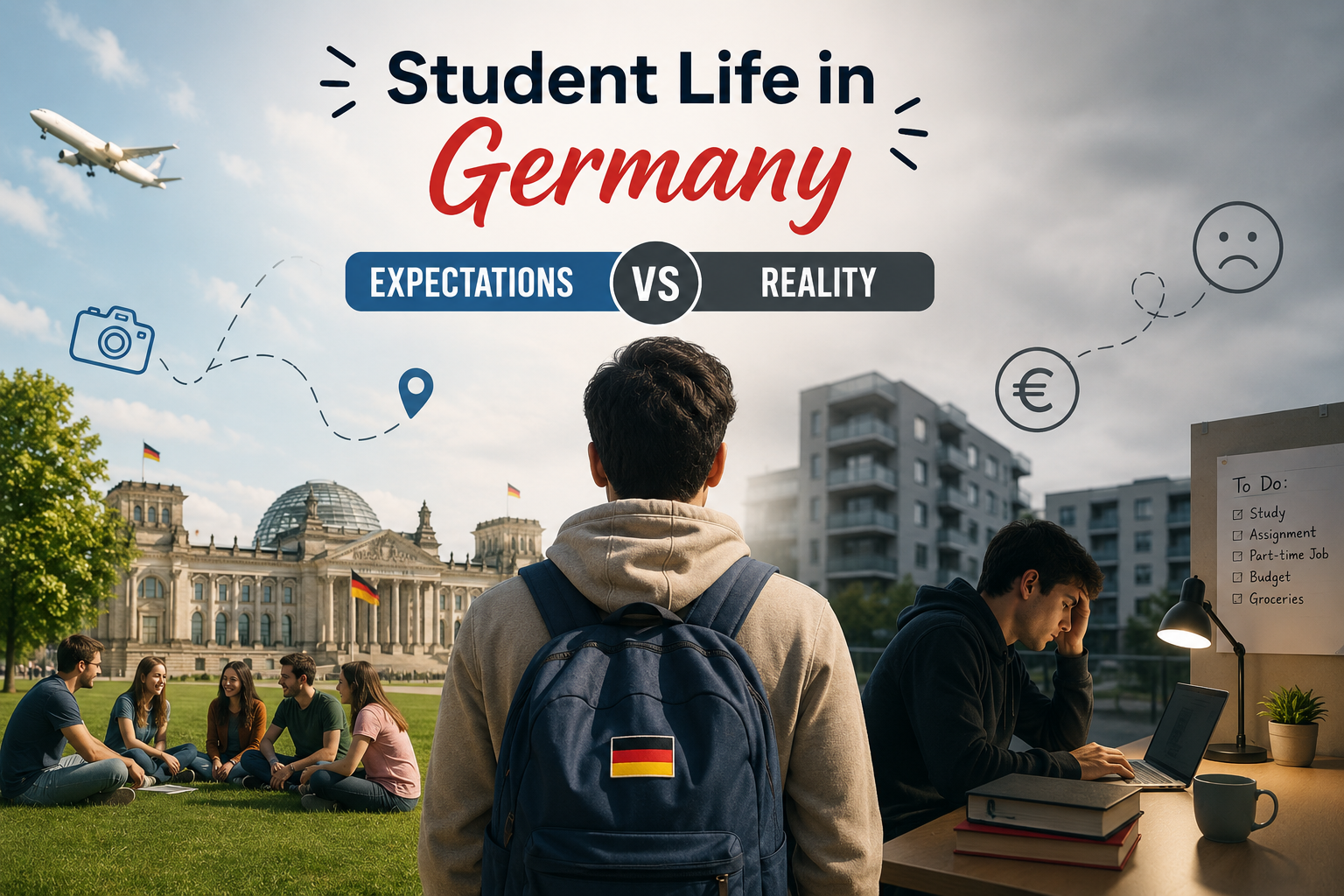
Why Germany Attracts International Students
Germany has earned a strong reputation for higher education, research opportunities, and career prospects. Many public universities charge little to no tuition fees, making Germany an attractive option compared to countries like the US, UK, or Australia.
Students are also drawn by:
- Globally recognized universities
- Strong job market
- Safe environment
- High quality of life
- Opportunities to travel across Europe
However, moving abroad involves much more than university admissions.
Expectation #1: Everyone Speaks English
Reality: German Makes Life Much Easier
One of the biggest misconceptions among international students is that they can survive entirely with English.
While many young Germans speak English, daily life often requires German. Tasks such as visiting government offices, reading official documents, communicating with landlords, and handling local services become much easier when you understand German.
Students who learn German before arriving often adapt faster and feel more confident in everyday situations. German language skills are also valuable when applying for internships, part-time jobs, and full-time positions after graduation. Germany places significant importance on language skills for long-term integration and career opportunities.
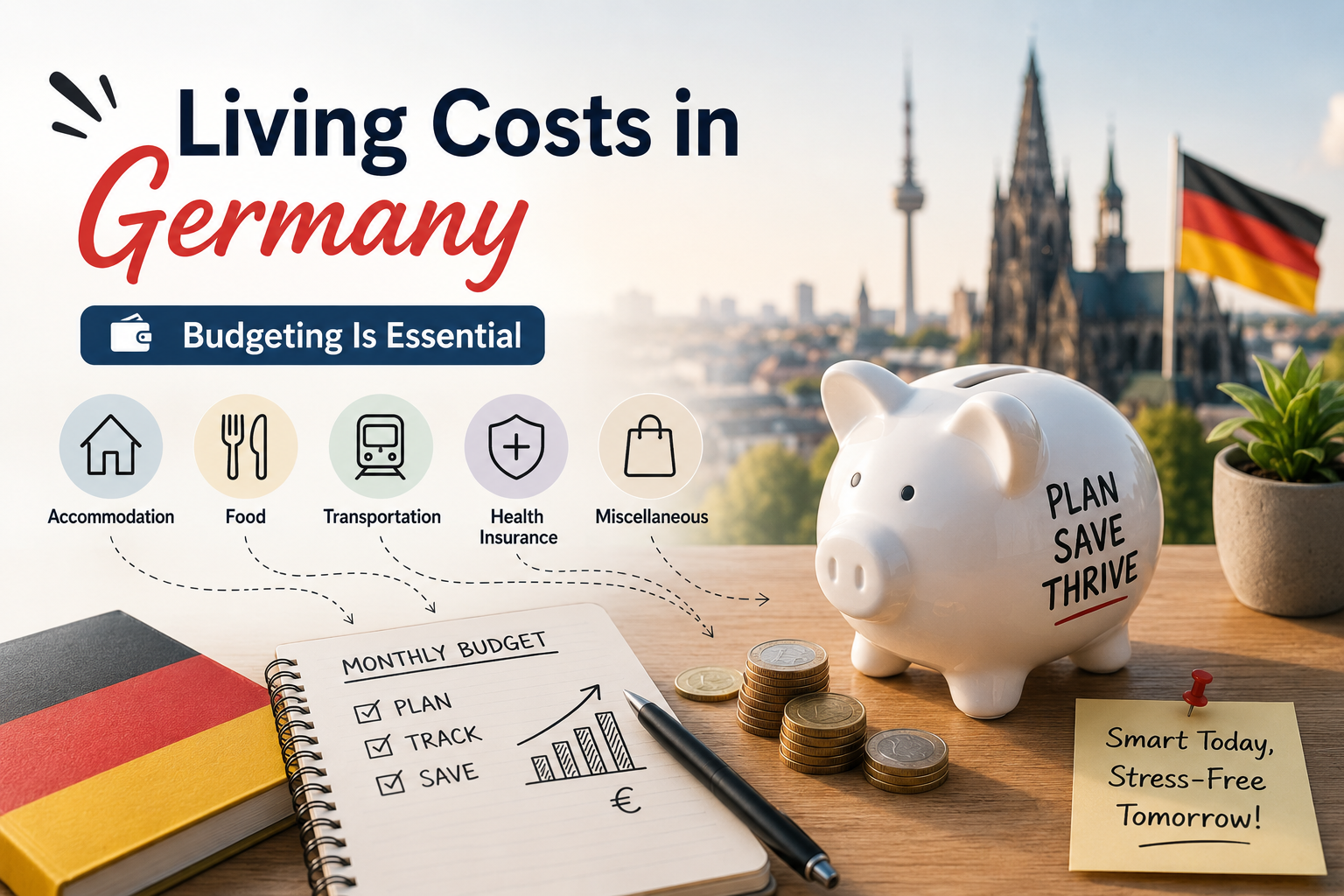
Expectation #2: Living Costs Are Very Cheap
Reality: Budgeting Is Essential
Many students hear that Germany offers free education and assume living expenses are also low.
While tuition fees may be affordable, living costs can still be significant.
Typical monthly expenses include:
| Expense | Average Monthly Cost |
|---|---|
| Accommodation | €300–€700 |
| Food | €150–€300 |
| Transportation | €30–€70 |
| Health Insurance | €120–€150 |
| Miscellaneous | €100–€200 |
The exact amount depends on the city. Munich, Frankfurt, and Hamburg are usually more expensive than smaller student cities.
Good financial planning is essential for a comfortable student life.
Expectation #3: Finding Accommodation Is Easy
Reality: Housing Can Be Challenging
Many students expect to find accommodation quickly after receiving admission.
Unfortunately, housing is one of the biggest challenges faced by international students in Germany.
Student dormitories often have long waiting lists, and private apartments can be expensive and highly competitive.
Students should begin searching for accommodation several months before arrival and keep multiple options ready.
Expectation #4: University Life Is Relaxed
Reality: Academic Independence Is Demanding
German universities offer a different learning environment compared to many countries.
Professors generally expect students to manage their own schedules, complete assignments independently, and take responsibility for learning.
Attendance may not always be mandatory, but exam standards are often rigorous.
Many students initially enjoy the freedom but later realize that self-discipline is crucial for success.
Expectation #5: Making Friends Happens Automatically
Reality: Building Relationships Takes Time
Students often imagine an instant social life filled with international friends and exciting activities.
The reality is more gradual.
German culture values personal space and meaningful relationships. Friendships usually develop slowly but tend to be genuine and long-lasting.
Joining university clubs, sports groups, language exchange programs, and student events can help build a strong social network.
Expectation #6: Part-Time Jobs Are Easy to Find
Reality: Language Skills Matter
Germany offers many part-time job opportunities for students, but competition exists.
Students with German language skills generally have access to more opportunities, including customer-facing roles and internships.
Without German, options may be limited to warehouse work, delivery services, or English-speaking positions.
This is one reason why many students begin learning German before moving abroad.
Expectation #7: Life in Germany Is Always Exciting
Reality: Homesickness Is Normal
Moving to another country sounds exciting, but most international students experience homesickness at some point.
You may miss:
- Family
- Local food
- Festivals
- Friends
- Familiar routines
The first few months can feel overwhelming. Over time, however, most students adapt, build new routines, and become comfortable with their new environment.
Patience is an important part of the transition process.
Expectation #8: Germany Offers Unlimited Career Opportunities
Reality: Preparation Determines Success
Germany has a strong economy and excellent career prospects, but success is not automatic.
Students who perform well academically, develop professional skills, gain internship experience, and learn German usually have better employment opportunities.
Many employers value German communication skills alongside technical qualifications. Learning the language can significantly improve long-term career prospects.
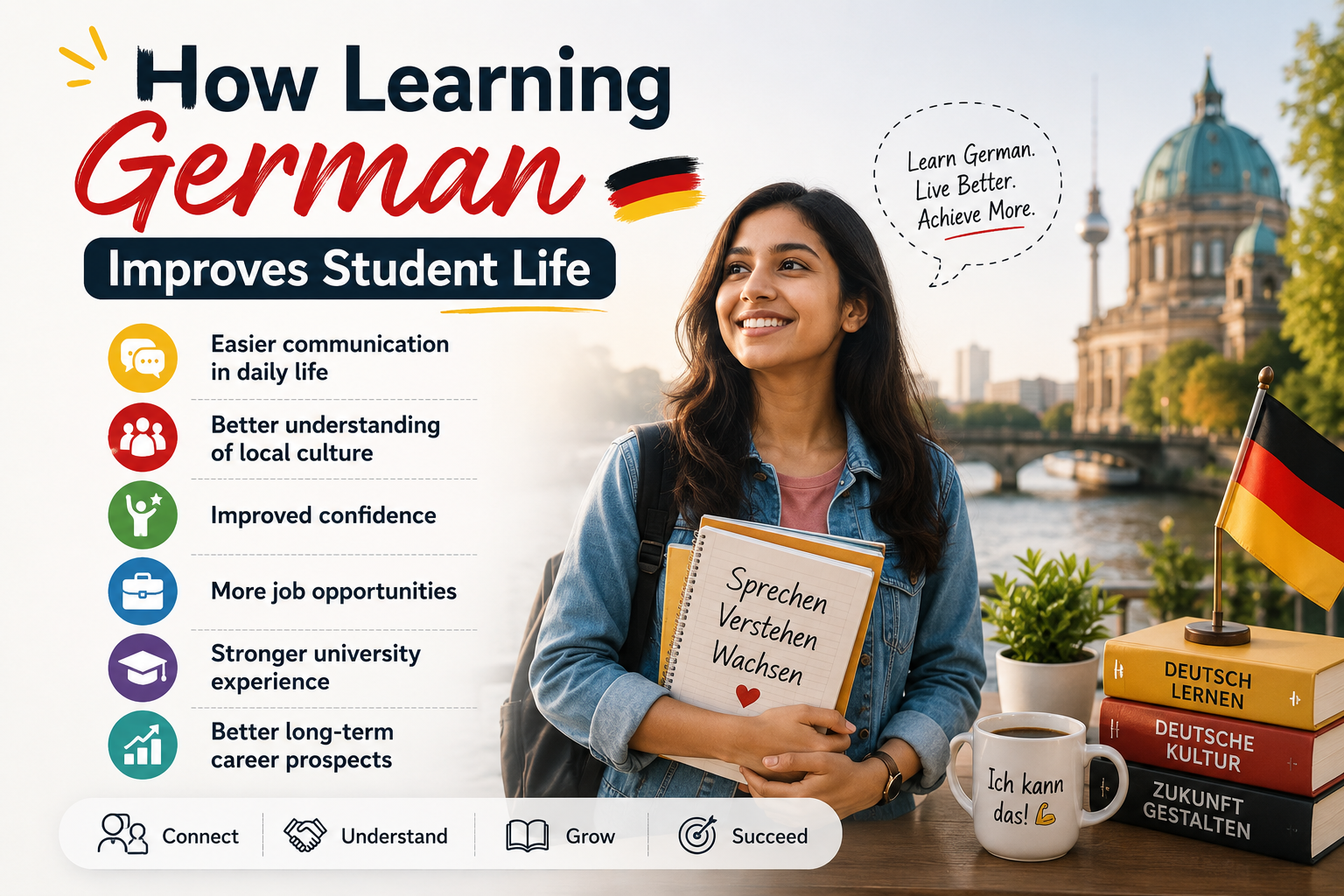
How Learning German Improves Student Life
Learning German before moving to Germany can make a significant difference.
Benefits include:
- Easier communication in daily life
- Better understanding of local culture
- Improved confidence
- More job opportunities
- Stronger university experience
- Better long-term career prospects
German language learning is not only about passing exams. Practical communication skills help students integrate more effectively into German society. Germanacharya focuses on practical German learning through live sessions, real-life conversations, and structured learning paths designed to build confidence in everyday communication.
Final Thoughts
Student life in Germany is rewarding, but it is not exactly what many students imagine before arriving.
The expectation is often a perfect study-abroad experience with free education, easy jobs, and instant success. The reality involves adapting to a new culture, managing finances, finding accommodation, learning German, and developing independence.
The good news is that thousands of international students successfully navigate these challenges every year. With proper preparation and realistic expectations, Germany can offer an outstanding educational and personal growth experience.
If Germany is part of your future plans, start preparing early, especially by developing your German language skills. The more prepared you are before arrival, the smoother your transition will be.
FAQs
Is Germany a good country for international students?
Yes. Germany offers high-quality education, strong career opportunities, and a safe environment for international students.
Do I need German to study in Germany?
Many programs are available in English, but German helps significantly in daily life, part-time jobs, internships, and long-term career growth.
How much money does a student need per month in Germany?
Most students spend between €800 and €1,500 per month depending on the city and lifestyle.
Is it difficult to find a part-time job in Germany?
Opportunities are available, but German language skills often improve job prospects.
What is the biggest challenge for international students in Germany?
Common challenges include accommodation, language barriers, cultural adjustment, and financial management.

[614]aiplay Official Login | Trusted Online Slot Casino Malaysia,aiplay offers a secure gaming experience with fast payouts and the latest apk download for mobile users. Join the top rated online slot platform in Malaysia today. visit: aiplay
[4700]1111bet Official Login | বিকাশ পেমেন্ট ও সেরা ক্যাসিনো বোনাস,1111bet এর অফিসিয়াল লগইন করুন এবং সহজ নিয়মে স্লট গেম খেলুন। বিকাশ পেমেন্টের সুবিধা ও আকর্ষণীয় অনলাইন ক্যাসিনো বোনাস পেতে আজই অ্যাপটি ডাউনলোড করুন। visit: 1111bet
If you love slots then this is the place to be. The variety of games is insane and the bonuses are generous. Love taipan77slot.
I’ve been trying a few sites lately and this one really stands out. The payouts are fast and the interface is super smooth. Definitely check out sin888bet if you want a reliable spot.
The game variety here is insane! I spent the whole weekend exploring the slots and the bonuses are actually fair. Love the vibe of jilihotcasino