
TELC vs Goethe Pflege
TELC vs Goethe Pflege: Which Exam Should Nurses Take?
Every nurse we counsel asks us this question sooner or later: TELC or Goethe? Both exams get you the B2 certificate German hospitals ask for. But they are not the same exam wearing two different labels, and picking the wrong one can cost you months of extra preparation. Let’s walk through exactly how TELC vs Goethe Pflege compares, so you can choose once and prepare with confidence.
Why TELC vs Goethe Pflege Matters for Nurses
You are not just collecting a language certificate. You are proving to a German hospital, and to the recognition authority reviewing your Anerkennung file, that you can safely talk to patients. You need to show you can read medical reports and communicate with doctors under pressure. The exam you choose should test exactly that, not just general conversation skills. This is where TELC vs Goethe Pflege stops being a minor preference and starts shaping your entire preparation timeline.
What Is telc Deutsch B1-B2 Pflege?
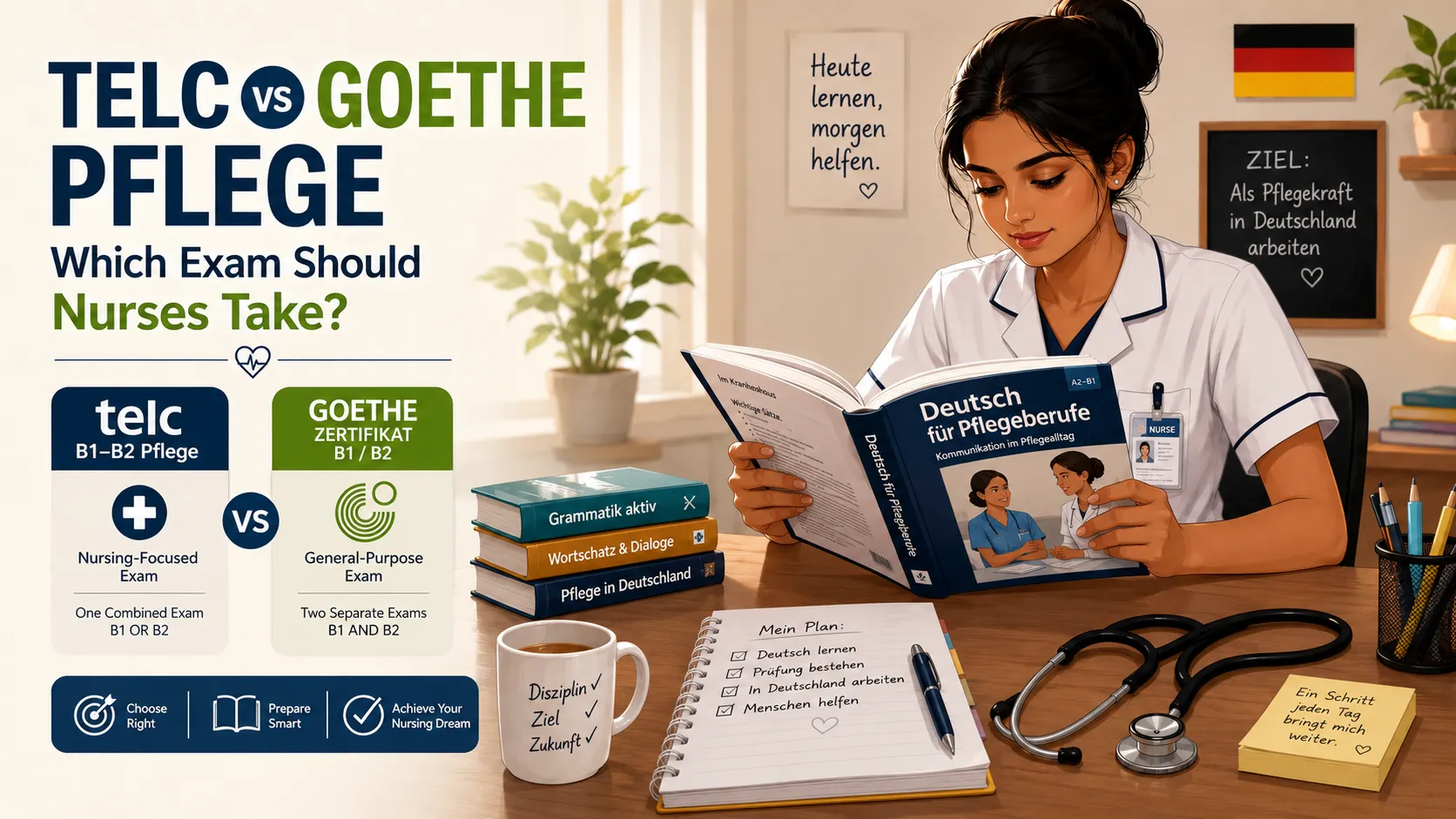
TELC, short for The European Language Certificates, comes from the German Adult Education Association. It is an organisation with roots going back to 1968. You can see the full list of specialised exams on the official telc website. For nurses, TELC built something specific: the Deutsch B1-B2 Pflege exam. Every task inside it comes from a hospital setting. You will read patient handover notes, listen to conversations between nurses and doctors, and write a short shift report. This is exactly the kind of writing you will do on your first week at work. Scoring works differently too. TELC averages your performance across all four modules, so a strong speaking section can help offset a weaker writing score.
What Is the Goethe-Zertifikat, and Where Does It Fit?
The Goethe-Institut runs the Goethe-Zertifikat. It remains the most globally recognised German exam, especially for university admissions and general visa purposes. For nurses specifically, Goethe does offer a healthcare-focused option called Goethe-Test PRO Pflege. In practice, though, availability in India is limited, with only a handful of centres offering it. Most nurses preparing with Goethe instead take the standard Goethe-Zertifikat B1 and B2 as two separate exams, each tested and certified independently.
TELC vs Goethe Pflege: Side-by-Side Comparison
| Feature | telc B1-B2 Pflege | Goethe-Zertifikat B1 / B2 |
|---|---|---|
| Designed for | Nursing & healthcare specifically | General-purpose learners |
| Exam structure | One combined exam; B1 or B2 awarded based on performance | Two separate exams, certified independently |
| Content focus | Hospital scenarios: handovers, medical reports, ward vocabulary | Everyday and general professional topics |
| Scoring | Averaged across all 4 modules (compensatory) | Each module scored individually |
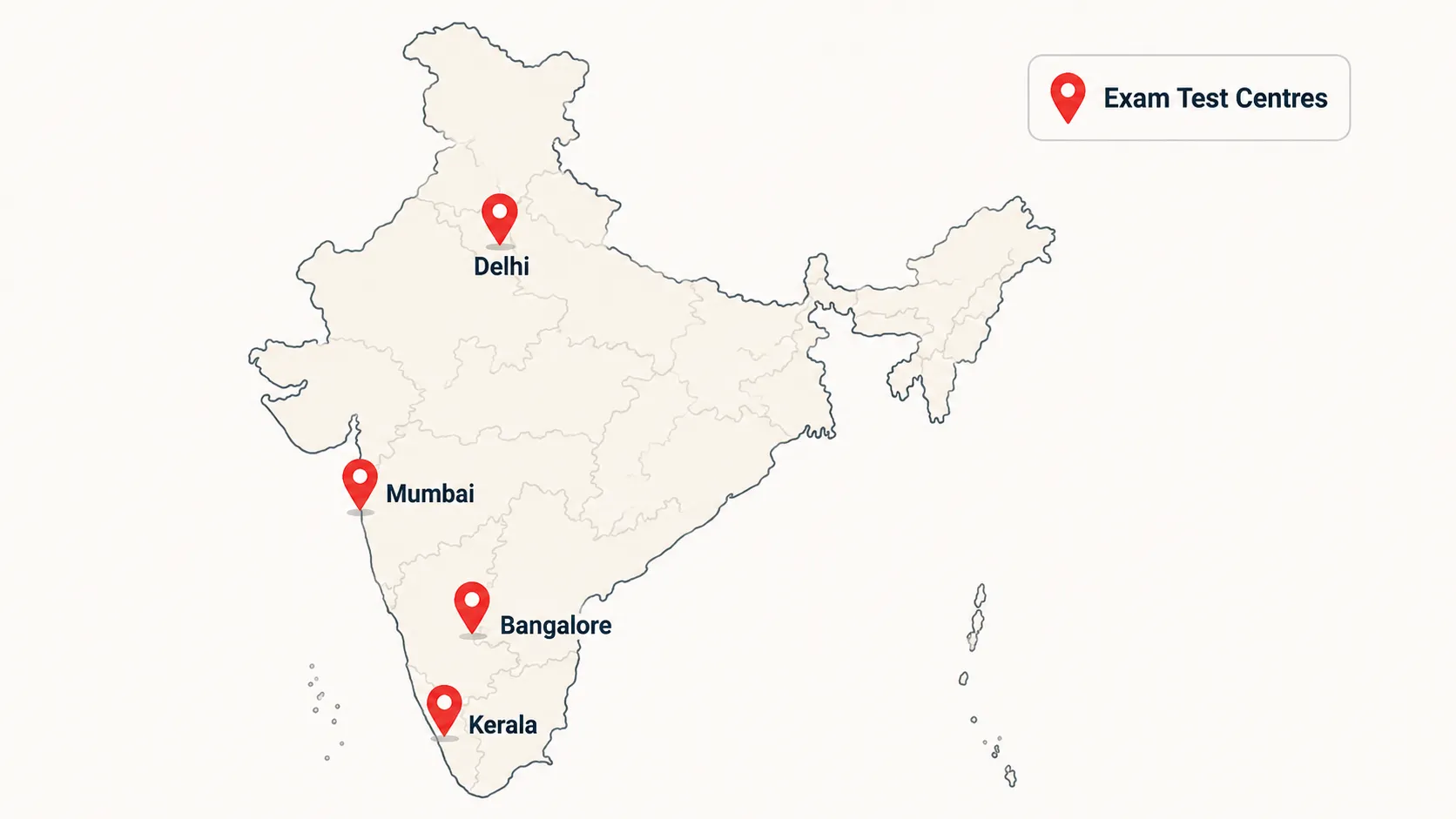
| India test centres | 4–6 (Delhi, Mumbai, Bangalore, Kerala) | Wide coverage for standard exam; Pflege version very limited |
| Typically preferred by | Many state Anerkennungsstelle for nursing recognition | Universities, general work & study visas |
| Cost in India | Usually a few thousand rupees lower | Slightly higher |
| Best for | Confirmed nursing career path | Still deciding between nursing, other work, or study |
TELC vs Goethe Pflege: What Employers Actually Prefer
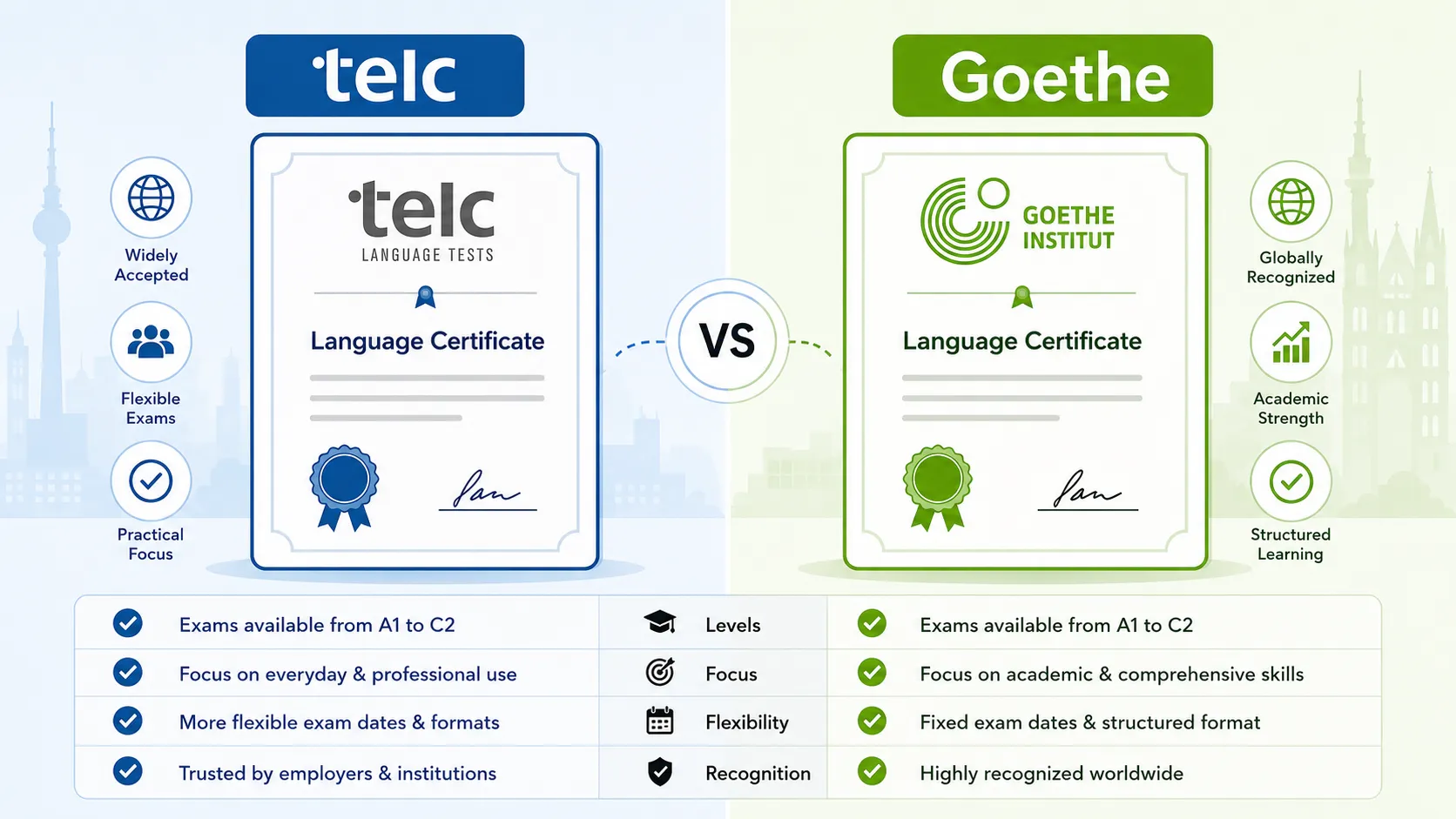
Here is the honest answer, not the diplomatic one. Many state recognition authorities explicitly request the TELC Pflege or Medizin format from healthcare applicants, since it directly demonstrates ward-ready communication. Standard Goethe or TELC B2 certificates remain valid too. Several states allow you to begin your Anerkennung process at B1, though B2 is typically expected before you practise independently. If your goal is nursing specifically, TELC B1-B2 Pflege usually gets you job-ready faster. Your preparation and your exam test the exact same content.
How Long Does It Actually Take to Prepare?
Reaching B2 from scratch typically takes 650 to 1000 study hours. Most of our nursing students complete this in 8 to 12 months with consistent, focused effort. Medical vocabulary needs extra attention regardless of which exam you choose, since hospital German differs significantly from everyday conversational German. Students who study daily, even in short 45-minute sessions, tend to move noticeably faster. Long, irregular study bursts once a week slow progress down.
Cost and Test Centre Availability in India
Budget matters, especially when you are also saving for a blocked account and relocation costs. TELC exam fees in India typically run a few thousand rupees lower than Goethe’s. TELC also has 4 to 6 authorised centres across India, including Delhi, Mumbai, Bangalore, and Kerala. Goethe’s standard B1 and B2 exams are available more widely across Indian cities. The specialised Goethe-Test PRO Pflege, though, remains limited to very few locations, which can add travel cost and scheduling pressure to your plan.
TELC vs Goethe Pflege: Which Exam Should You Take?
If nursing in Germany is your specific, confirmed goal, TELC Deutsch B1-B2 Pflege is usually the smarter choice. It tests exactly what your job will demand, and it is often the format recognition authorities expect. It also typically costs a little less in India. If you are still deciding between nursing, general skilled work, or further study, the standard Goethe-Zertifikat keeps your options broader. They are recognised everywhere without question.
This is the kind of decision our German course built for nurses helps you make early. Deciding before you invest months into the wrong preparation track saves real time. A quick, honest conversation upfront saves you far more time than switching exams halfway through.
What Happens After You Pass?
Passing your exam is a milestone, not the finish line. You will still need your Anerkennung, the formal recognition of your nursing qualification, before you can practise independently in Germany. If you do not yet have a confirmed job offer, the Opportunity Card visa route for Indians can help. It lets you enter Germany and search for a hospital position directly, with your B1 or B2 certificate already strengthening your application. Understanding where B1, B2, and beyond actually fit into your bigger journey is worth ten extra minutes. Our German language levels guide breaks down exactly what each level unlocks.
Common Mistakes Nurses Make When Choosing an Exam
Picking an exam based only on which one has a centre nearby, without checking content relevance, is a common early mistake. Assuming any B2 certificate automatically satisfies every state’s Anerkennungsstelle is another, since requirements genuinely vary by state. Starting general German preparation without ever practising hospital-specific vocabulary is the most expensive mistake of all. You end up re-learning the same content twice, once for the exam and once for your actual job.
Frequently Asked Questions
Is telc B1-B2 Pflege harder than the standard Goethe exam?
Not necessarily harder, just more specific. It focuses entirely on hospital and patient-care scenarios. Nurses who prepare with relevant vocabulary from day one often find it more manageable than a general exam.
Can I switch from Goethe preparation to TELC Pflege later?
Yes, though it does cost you some time. Your grammar and general vocabulary carry over, but you will still need focused practice with medical terms, patient conversations, and hospital documentation.
Does every German state accept telc B1-B2 Pflege for nursing recognition?
Most do, and many explicitly prefer it, but requirements vary by state. Always confirm the exact requirement with your target state’s recognition authority before booking your exam.
Is B1 enough to start working as a nurse in Germany?
B1 can be enough to begin your Anerkennung process in several states, and it may suffice for nursing assistant roles. B2 is typically required, though, before you can practise independently.
How many attempts does it usually take nurses to pass?
Most well-prepared candidates pass on their first or second attempt. Structured preparation with hospital-specific vocabulary practice significantly improves first-attempt success rates.
Conclusion
TELC vs Goethe Pflege ultimately comes down to how specific your goal already is. Nursing, and only nursing, points clearly toward TELC B1-B2 Pflege. A broader, still-undecided career path points toward the standard Goethe-Zertifikat. Either way, the language work you put in now becomes the foundation for your entire German career. It deserves a plan, not a guess.

I just finished setting up my account and the process was super smooth. Can’t wait to start winning big here. Check out jili95register for a quick start!
Had a bit of a struggle finding a stable platform but panalokalogin works perfectly on my mobile. Great experience so far with the customer support too.
Top quality gaming experience and the customer support is very helpful. Give evojililogin a try
Top notch customer service and very fair odds. It feels like they actually care about the players here. I love using vnqu88 for my daily fun.
Finally found a place that actually delivers on its promises. The gameplay is thrilling and the support team is super helpful. Give 007betgame a try
Finally found a site that doesn’t lag during the big games. The payout speed is impressive and the variety of options is great. Highly recommend 939bet43 to anyone looking for a reliable spot.
A very honest platform with fair odds. I appreciate how transparent everything is here. You can trust bdjl777 for a fair game.
The best platform I have encountered in the region. Very user friendly and the promotions are actually useful for players. Big thanks to ph39jiliph.
Choosing between TELC B1-B2 Pflege and Goethe comes down to alignment with actual workplace demands. For nurses with a clear path toward working in German hospitals, TELC Pflege is clearly the more efficient option—focusing preparation on shift reports and handover notes prevents having to relearn specialized medical vocabulary on the job.
EspecialistaemHolding