
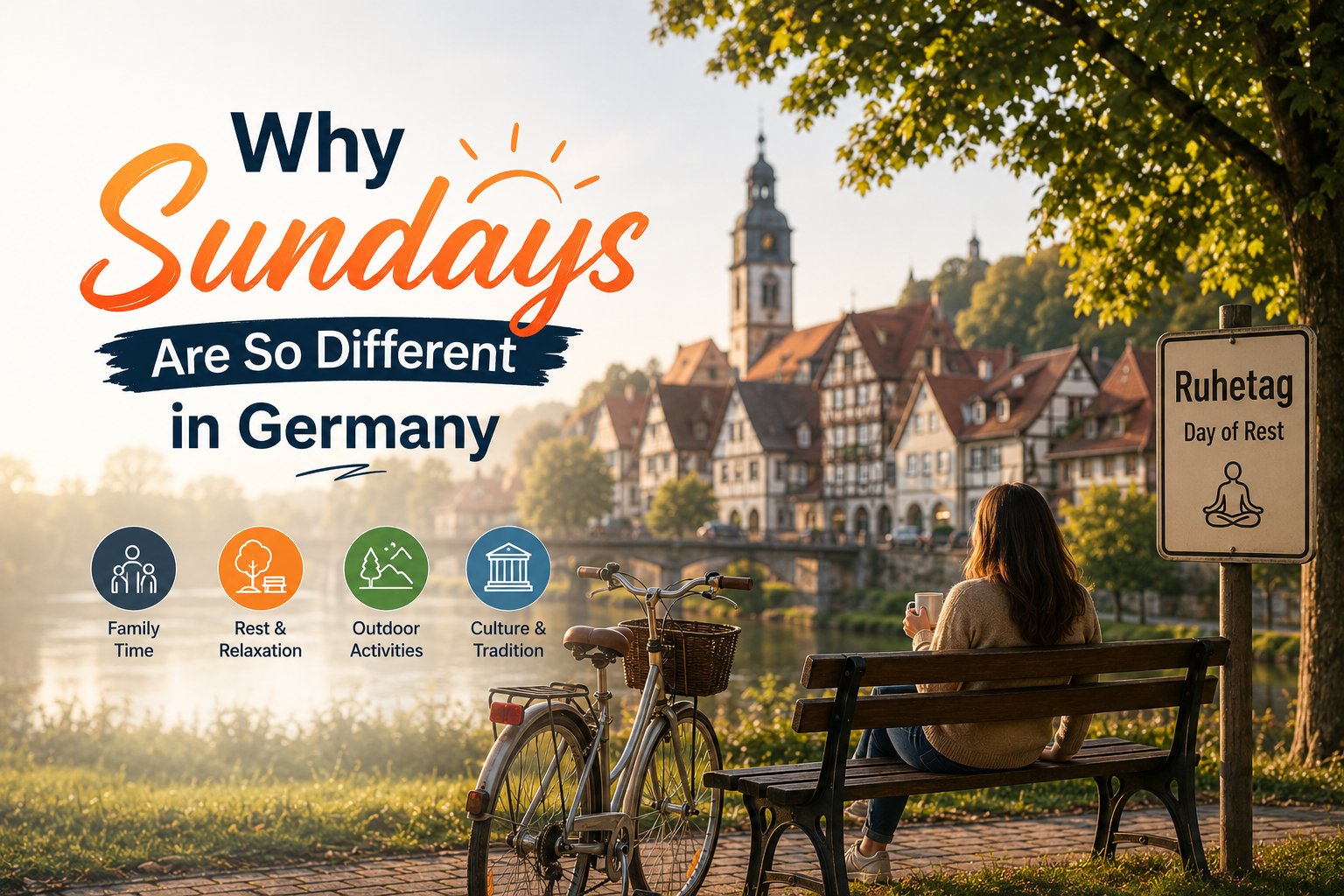
Why Sundays Are So Different in Germany
Why Sundays Are So Different in Germany is a question many international students, tourists, and expats ask after arriving in the country. Unlike many parts of the world where weekends are busy shopping days, Germany follows a unique tradition that transforms Sundays into a quiet day focused on rest, family, and personal time.
Germany is known for its efficiency, strong work culture, and organized lifestyle. However, one aspect of German life often surprises international visitors and students: Sundays are remarkably quiet. Unlike many countries where shopping centers, markets, and businesses remain busy throughout the weekend, Germany treats Sunday as a special day dedicated to rest, family, and personal time.
Understanding why Sundays are different in Germany provides valuable insight into German culture, traditions, and social values.
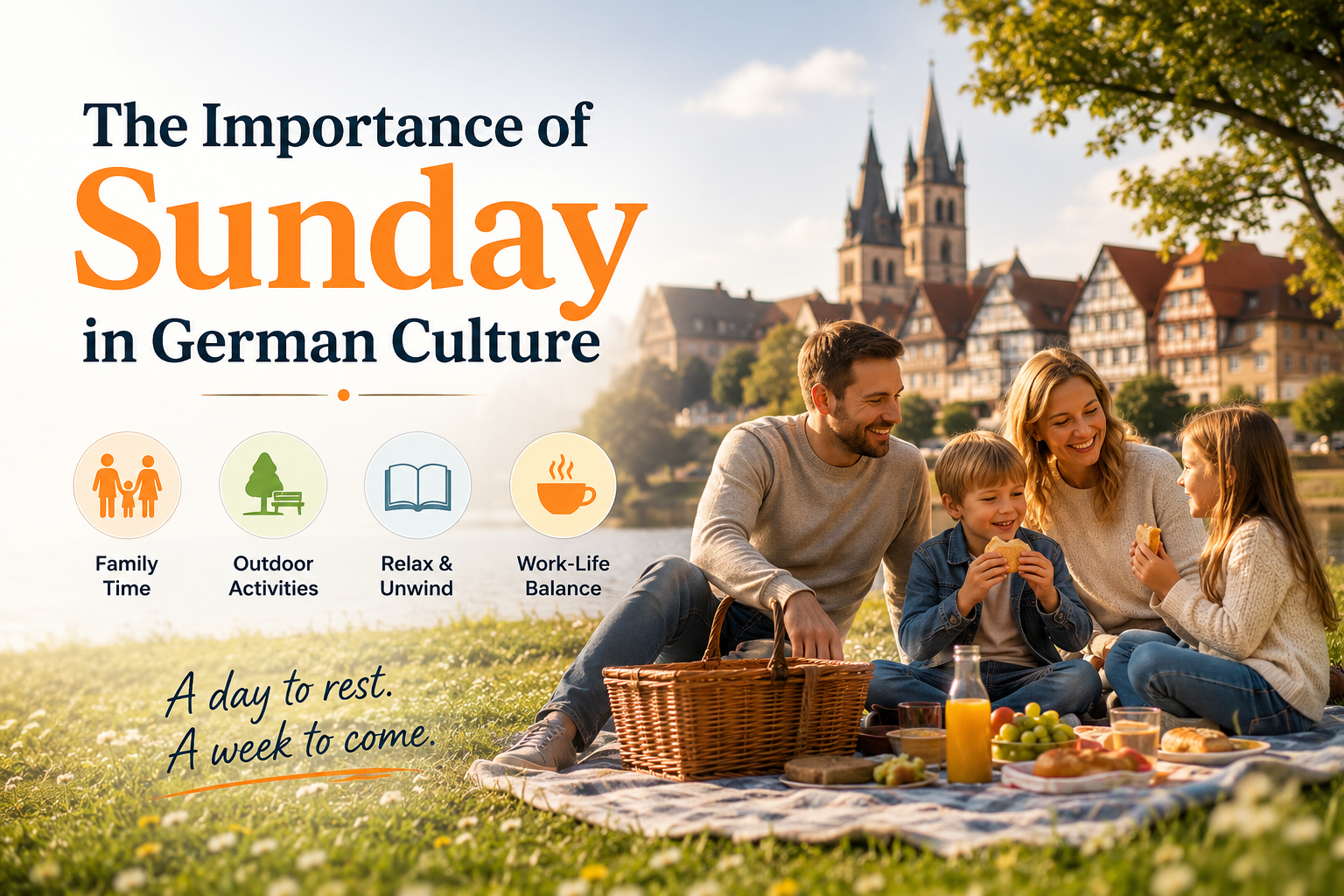
The Importance of Sunday in German Culture
In Germany, Sunday is traditionally considered a day of rest. This practice has deep historical and cultural roots that continue to influence modern society.
Many Germans use Sundays to spend time with family, enjoy outdoor activities, visit friends, read books, or simply relax. The day is generally viewed as an opportunity to recharge before the start of a new workweek.
This emphasis on work-life balance is one of the reasons Germany consistently ranks among the countries with a high quality of life.
Why Most Shops Remain Closed on Sundays
One of the first things newcomers notice is that most stores remain closed on Sundays.
The Sunday Trading Laws
German regulations restrict the opening of most retail stores on Sundays. These laws are designed to protect workers and ensure that everyone has a guaranteed day for rest and family life. As a result, supermarkets, clothing stores, electronics shops, and many other businesses typically remain closed throughout the day.
Exceptions to the Rule
Although most stores are closed, some businesses are allowed to operate, including:
- Restaurants and cafés
- Bakeries during limited hours
- Gas stations
- Shops at major train stations and airports
- Certain tourist-area businesses
These exceptions help residents and travelers meet essential needs while maintaining the spirit of a quiet Sunday.
How Germans Usually Spend Their Sundays
Sunday activities in Germany tend to focus on relaxation and personal enjoyment rather than shopping or work.
Family Gatherings
Many families use Sundays for shared meals, visits to relatives, or spending quality time together. A traditional Sunday lunch remains an important custom in many households.
Outdoor Activities
Germany offers numerous parks, forests, lakes, and hiking trails. On Sundays, people often go:
- Hiking
- Cycling
- Walking in nature
- Visiting gardens and parks
- Taking short day trips
These activities allow individuals and families to enjoy fresh air and unwind.
Cultural Experiences
Museums, historical attractions, castles, and cultural sites are popular Sunday destinations. Many Germans use the day to explore local history and culture.
The Concept of “Ruhetag”
What Does Ruhetag Mean?
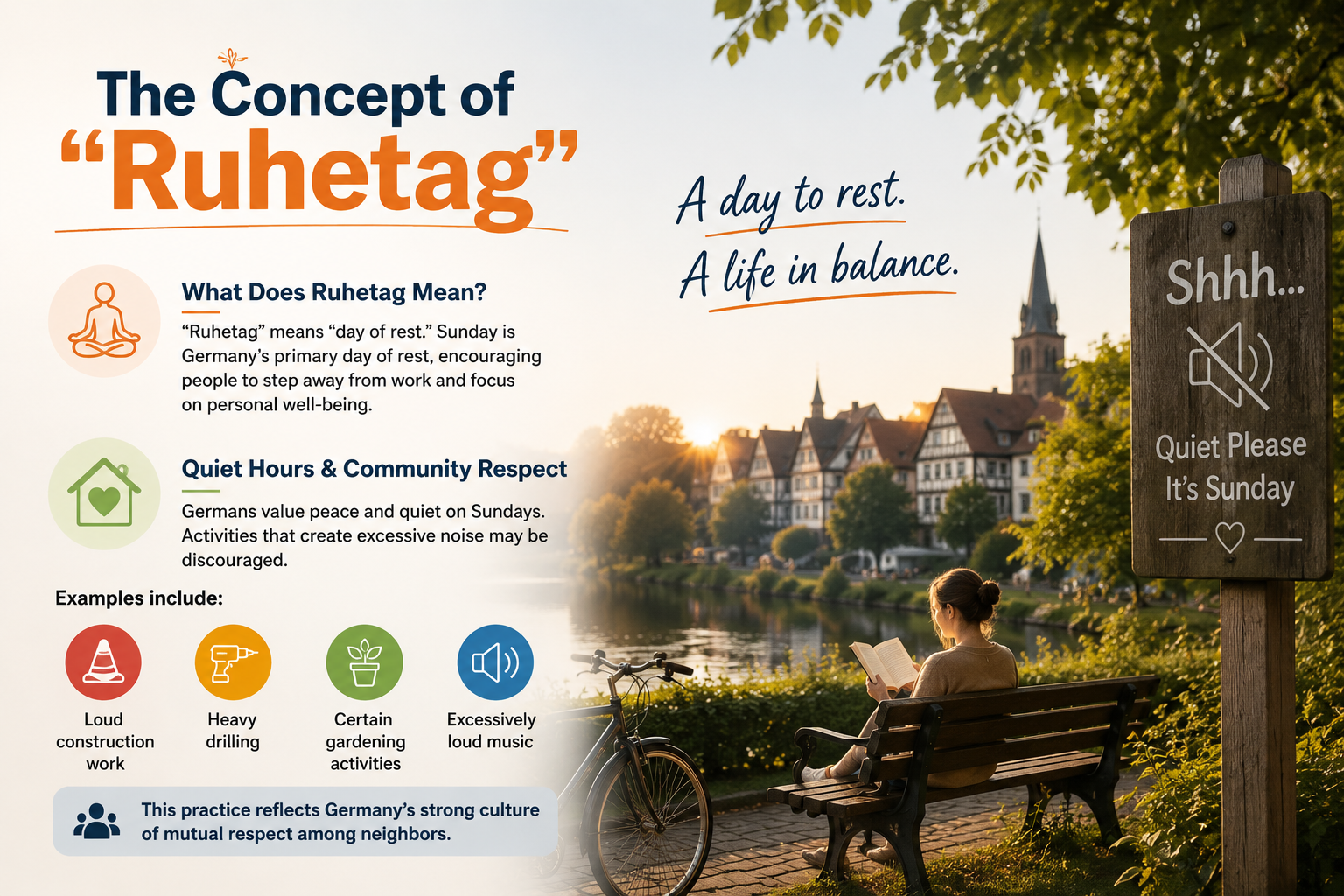
The German word “Ruhetag” translates to “day of rest.” Sunday is widely regarded as the country’s primary Ruhetag. The concept encourages people to step away from professional responsibilities and focus on personal well-being.
Quiet Hours and Community Respect
German communities generally value peace and quiet on Sundays. Activities that create excessive noise may be discouraged.
Examples include:
- Loud construction work
- Heavy drilling
- Certain gardening activities
- Excessively loud music
This practice reflects Germany’s strong culture of mutual respect among neighbors.
The Historical Background of Sunday Traditions
Germany’s Sunday culture has been shaped by both religious and social influences.
Religious Origins
Historically, Christianity played a significant role in establishing Sunday as a sacred day. People attended church services and avoided regular work. Although modern Germany is diverse and increasingly secular, many Sunday traditions continue because they have become part of the country’s cultural identity.
Worker Protection Policies
Over time, labor laws reinforced the idea that employees deserve a guaranteed day off. These regulations helped strengthen workers’ rights and contributed to healthier work-life balance practices.
Challenges Faced by International Students and Tourists
People arriving in Germany for the first time often find Sunday restrictions surprising.
Forgetting to Buy Groceries
A common mistake is waiting until Sunday to shop for groceries. Since most supermarkets are closed, planning ahead becomes essential.
Limited Shopping Opportunities
Visitors from countries where stores operate seven days a week may initially find the quiet atmosphere unusual. However, many eventually appreciate the slower pace and peaceful environment.
Benefits of Germany’s Quiet Sundays
While Sunday closures may seem inconvenient at first, many advantages come with the system.
Better Work-Life Balance
Employees receive a reliable day for rest and personal activities, reducing stress and supporting overall well-being.
Stronger Family Connections
A common day off makes it easier for families and friends to spend time together.
Mental and Physical Recovery
Taking a break from work and commercial activity allows people to recharge and return to the new week with renewed energy.
What You Should Do on a Sunday in Germany
If you are living in or visiting Germany, consider using Sundays to experience local culture.
Recommended Activities
- Visit a park or nature trail
- Explore a museum
- Enjoy a traditional German café
- Take a bicycle ride
- Spend time with friends or family
- Visit a nearby town or historical site
These activities help you understand why many Germans value Sundays so highly.
Conclusion
Sundays in Germany are different because they reflect the country’s commitment to rest, family life, and work-life balance. The closure of most shops, the emphasis on quietness, and the tradition of spending time with loved ones create a unique atmosphere that distinguishes Germany from many other nations. Although visitors may initially find the restrictions unusual, many come to appreciate the peaceful rhythm that Sundays bring to German society.
Frequently Asked Questions (FAQs)
Are all stores closed on Sundays in Germany?
Most retail stores are closed, but restaurants, gas stations, airport shops, and some train station stores usually remain open.
Why does Germany keep shops closed on Sundays?
The practice is intended to protect workers’ rights, promote family time, and preserve a traditional day of rest.
What should tourists know about Sundays in Germany?
Tourists should buy groceries and essential items in advance because most shops will be closed on Sunday.
Is it illegal to work on Sundays in Germany?
Not entirely. Certain industries such as healthcare, hospitality, transportation, and emergency services continue operating on Sundays.
What is Ruhetag in Germany?
Ruhetag means “day of rest” and refers to a period dedicated to relaxation, reduced noise, and personal time.

[1556]Bangjagoslot | Login Resmi Link Alternatif Slot Gacor Hari Ini,Bangjagoslot menyediakan link alternatif resmi untuk akses mudah. Daftar situs slot deposit dana dengan pilihan game gacor hari ini. Segera bergabung dan mainkan sekarang! visit: bangjagoslot
[2017]a6star Official Login | Trusted Online Casino with Fast Payouts,a6star offers a seamless gaming experience. Download the official app to enjoy fast payout slots and learn how to play baccarat. Join the action today! visit: a6star
I love how stable the login process is. No more annoying crashes when I’m on a winning streak! bw777login
Spot-on explanation of Germany’s Sunday trading laws and the deep-rooted cultural values behind them. The tip about major train station (Hauptbahnhof) shops and gas stations is a lifesaving piece of advice for anyone unprepared over the weekend! For those currently living in or visiting Germany, how long did it take you to adapt your weekly routine to Sunday closures, and what has become your favorite way to spend a quiet Ruhetag?
MelhorAdvogadodeSãoPaulo
Really impressed with the odds and the overall vibe of the site. It feels very secure and fair for the players. Give br79bet42 a try if you are looking for something fresh.